

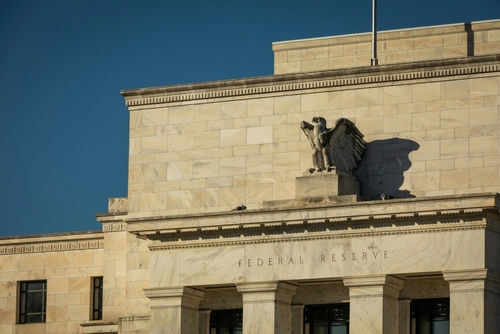
A Senate stall over President Trump’s Fed chair pick could leave America’s central bank in a leadership limbo right as interest rates and inflation politics collide.
Quick Take
- President Trump has nominated former Fed governor Kevin Warsh to replace Jerome Powell as Federal Reserve chair when Powell’s term ends in May 2026.
- Sen. Tom Tillis (R-NC) says he will not support Warsh until a Justice Department probe tied to Powell’s oversight of Fed building renovations is resolved.
- If the Senate does not confirm a new chair in time, Powell could remain on the Fed’s Board through 2028, while internal Fed rules and leadership roles may determine who acts as interim.
- Tillis has floated the unusual idea of serving as “chair pro tem,” though the Fed’s structure typically points to existing Board leadership in a vacancy.
Warsh’s nomination meets a Senate bottleneck inside the GOP
President Trump announced Kevin Warsh as his choice to lead the Federal Reserve on January 30, 2026, setting up a high-stakes confirmation as Jerome Powell’s chair term approaches its May expiration. Warsh’s Senate Banking Committee hearing began in late March or early April, leaving a narrow window for Senate action. Sen. Tom Tillis has publicly conditioned his support on the resolution of a Justice Department probe related to Powell’s oversight of building renovations, complicating a process Republicans otherwise control.
The immediate question is not only whether Warsh gets confirmed, but what happens if the Senate runs out the clock. Tillis has suggested he would serve as “chair pro tem” if Warsh is not confirmed by May 15. That statement underscores the political cross-pressure inside a GOP-led Senate: align with Trump’s pick and desire for policy change, or prioritize concerns about process, oversight, and institutional credibility. The public nature of Tillis’s stance also increases the odds markets pay close attention to every procedural delay.
What the law and Fed structure suggest if confirmation slips past May
The Federal Reserve chair is selected from the Board of Governors and must be confirmed by the Senate for that specific role, separate from confirmation as a governor. That structure, rooted in the Banking Act of 1935, is designed to balance independence with democratic accountability. Powell’s chair term ends in May 2026, but his term as a governor runs to January 2028, meaning he could remain at the Fed even if he is no longer chair, depending on decisions made inside the administration and the Senate process.
Because Tillis’s “chair pro tem” idea has little modern precedent, the practical fallback is typically internal: an existing Fed leader could serve in an acting capacity if the chairmanship becomes vacant. The Fed’s current leadership includes vice chairs and other governors with defined terms, and institutional continuity has historically been part of the Fed’s public credibility. The available research does not establish a clear legal pathway for a sitting senator to temporarily run the Fed, which makes that proposal look more like political leverage than a settled succession plan.
The Powell probe becomes a political lever—and a trust problem
The Justice Department investigation into Powell’s renovation oversight is central to Tillis’s stated opposition, and it changes the incentives for everyone involved. For Trump’s team, a delayed confirmation keeps Powell’s shadow over the central bank while the administration is pushing for a different direction, including rate policy aligned with its economic agenda. For Senate Republicans wary of institutional damage, tying confirmation to the probe signals that transparency and oversight are not optional, even when the nominee comes from their own party’s president.
Why this matters to households, markets, and the “Fed independence” debate
Interest-rate policy hits families through mortgages, car loans, credit cards, and job growth. Leadership uncertainty at the Fed can add volatility if markets start guessing who will be in charge and what that person will do. Reporting described the fight as a proxy war over central bank independence, pitting a White House that values loyalty and policy alignment against senators and market participants who fear politicizing monetary policy. The research also notes investors can prefer clarity even when they like an administration’s broader agenda.
For conservatives frustrated by inflation and years of elite-led mismanagement, the episode lands as another example of how Washington’s institutions can bog down even when one party holds power. For liberals who worry about political pressure on the Fed, the same facts feed a different concern: that monetary policy could become a partisan tool. Either way, the shared takeaway is not comforting—governing basics like staffing key economic posts can be derailed by investigations, internal party friction, and procedural bottlenecks that leave ordinary Americans paying the price.
Who will run the Federal Reserve if the Senate doesn't confirm Trump's pick?. DONALD TRUMP? https://t.co/f3KGatFjrt
— Ola Coola (@o422coola) April 21, 2026
If the Senate does not confirm Warsh before Powell’s chair term expires, the next chapter will likely hinge on a mix of Senate timing, internal Fed leadership roles, and how long the investigation’s cloud persists. The research does not provide a definitive answer for who would run day-to-day operations in every scenario, but it does make one point clear: uncertainty itself becomes a policy problem. In a high-rate, high-debt era, even temporary ambiguity at the top of the Fed can ripple through markets and household budgets.
Sources:
Trump says he will fire Federal Reserve chair if he does not resign
Who has to leave the Federal Reserve next?
Fed chair race becomes proxy war over central bank independence
Board of Governors of the Federal Reserve System