
The United Nations chief is warning the world about “full war” in the Middle East, but his message sounds very different depending on whether you listen to the clips or read the fine print.
Story Snapshot
- UN Secretary-General António Guterres says the Gulf war is “out of control” and the world is “on the edge of a wider war.”[2][3][7]
- He demands the United States and Israel “end the war” immediately, while telling Iran to stop attacking its neighbors and shipping routes.[1][2][3][4][5]
- His warnings focus on energy prices, trade, and “global economic shocks,” raising real concerns for American families already hit by past inflation.[1][3][4][6]
- Despite the alarm, his actual role is to push diplomacy, not predict World War III, and both sides still talk about keeping the fight limited.[2][3][4]
UN Warnings Paint A Dire Picture Of The Middle East
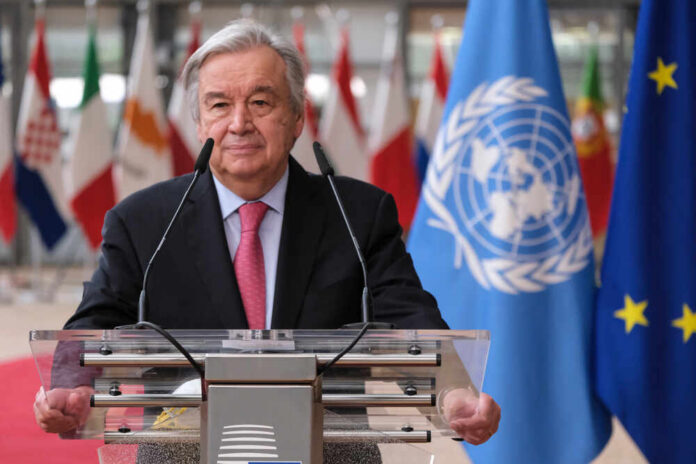
United Nations Secretary-General António Guterres has spent weeks warning that the Middle East conflict is “out of control” and that the world is “staring down the barrel of a wider war.”[2][3][5][7] He says the current Gulf war has “gone too far” and risks spiraling into a larger regional firestorm if leaders do not change course.[1][3] His language is meant to shock world capitals, and it clearly does, because he ties it to rising human suffering and global fallout.[2][3][4]
From New York, Guterres has described how fighting between the United States, Israel, Iran, and allied groups is spreading across the region, including strikes in Lebanon and threats against ships near the Strait of Hormuz.[1][2][3] He warns that the conflict is “metastasizing,” like a cancer, into attacks on Gulf States and vital sea lanes that carry oil, gas, and fertilizer.[2][3] He says these trends push the Middle East to a “breaking point” and drag the rest of the world along with it.[2][4]
Calls To End The War Put Heavy Pressure On Washington And Jerusalem
In his statements, Guterres has aimed sharp words straight at Washington and Jerusalem, declaring “it is high time to end the war.”[1][2][3][4][5] He says attacks by the United States and Israel on Iran are inflicting “immense human suffering” and already causing “devastating economic consequences.”[2][4] At the same time, he tells Iran to “stop attacking their neighbors,” notes that the United Nations Security Council condemned those attacks, and demands respect for navigation in the Strait of Hormuz.[1][2][3][4]
Guterres also singles out the fight between Israel and Hezbollah, saying “the war must stop” there as well.[1][3] He calls on Hezbollah to stop firing into Israel and urges Israel to end strikes in Lebanon that he says hit civilians “the hardest.”[1][3] In every message, he repeats that there is “no military solution,” that “war is not the answer,” and that only diplomacy, peace, and full respect for international law can end the disaster.[1][2][3][5] To many Americans, this sounds like the familiar United Nations pattern of urging restraint mainly on U.S. partners.
Dire Economic Warnings Hit Home For Ordinary Families
Beyond bombs and missiles, the United Nations chief keeps warning about the wallet impact. He says strikes and regional tension are disrupting trade, driving up energy prices, and putting civilians at greater risk as supply routes come under fire.[1][2][4][6] He stresses that closing or choking the Strait of Hormuz could trigger a “major global crisis,” including a possible global recession, because that narrow waterway carries so much of the world’s oil and gas.[1][3][6]
For American families who already lived through years of high gas prices, inflation, and supply problems under past left-wing spending sprees, that warning sounds all too familiar. Guterres talks about a “deeper global economic shock” and markets in turmoil as the war drags on.[1][3][6] His message is that every extra missile fired in the Gulf risks higher costs for fuel, food, and fertilizer, which then show up as bigger bills at the pump, the grocery store, and the farm.[1][3][4][6]
UN Role Is Alarm Bell, Not Crystal Ball, As Diplomacy Continues
There is another side to this story that many headlines skip. The Secretary-General’s job is to sound the alarm and push diplomacy, not to give a numeric forecast that war will automatically spread.[2][3] His phrases like “on the edge of a wider war” and “spiral out of control” are designed to raise the political cost of further escalation and force leaders back to the negotiating table.[2][3][5] They are caution lights, not guarantees that the region will explode tomorrow.
At the same time, public statements from both Iran and the United States have tried to frame their actions as limited and still compatible with talks, with both sides signaling that they want to avoid a full-scale regional war even as they trade blows.[1][4] Guterres himself admits “the choice still exists” between “dialogue and destruction” and insists conflicts end when leaders choose talks over more strikes.[2][4] For Americans watching from home, the message is clear: the Middle East remains dangerous, the United Nations will keep shouting about risk, and it is up to strong, clear-eyed leadership in Washington and allied capitals to protect our security, our economy, and our values.
Sources:
[1] Web – UN chief warns of risk of return to ‘full war’ in Mideast
[2] Web – UN chief warns Mideast war ‘has gone too far,’ demands Iran halt …
[3] Web – Guterres warns of ‘wider war’ as Middle East conflict enters second …
[4] YouTube – UN Chief Warns of Wider Middle East War, Urges Restraint
[5] Web – Guterres warns Middle East near ‘breaking point’ due to US-Israeli …
[6] YouTube – Antonio Guterres Says “End The War,” Names Envoy For …
[7] Web – United Nations Secretary-General António Guterres on Thursday …