

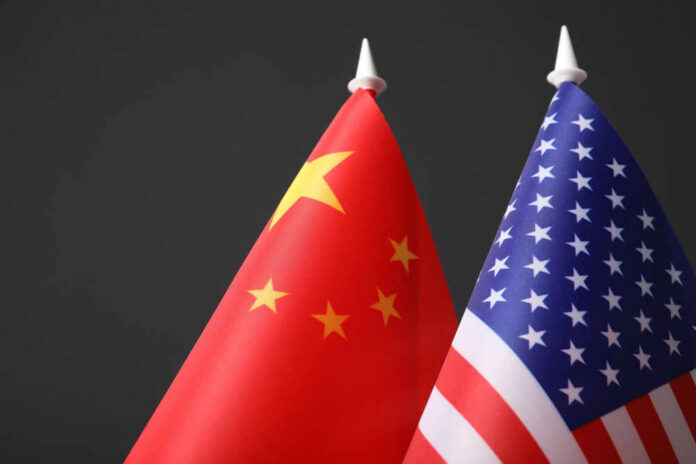
A few pounds of rare-earth minerals now sit at the center of a Pacific power struggle that could decide whether America bargains from strength or gets managed by Beijing.
Quick Take
- Trump’s Asia swing tied trade, security, and supply chains into one negotiating package aimed squarely at China’s leverage.
- Japan’s rare-earths framework and investment commitments signal “friendshoring” as a practical response to Chinese export curbs.
- South Korea’s shipbuilding and trade talks show how allies can translate strategic alignment into industrial capacity.
- The Trump-Xi meeting on APEC sidelines in Busan carried ceasefire-level stakes after a month of tit-for-tat restrictions.
Rare Earths Became the Trip’s Real Destination
Trump’s stop in Japan came loaded with symbolism and material stakes: a rare-earths framework with Prime Minister Sanae Takaichi, an investment package discussed in the hundreds of billions, and an unmistakable message that tariffs and market access can be used to pull allies closer. Rare earths sound like a niche commodity until you remember they touch nearly everything modern Americans buy, drive, or defend, from electronics to advanced military systems.
China’s export curbs on rare earths, triggered after U.S. tech purchase restrictions, exposed an uncomfortable truth for Washington: the world’s supply chain vulnerabilities don’t care about speeches. Beijing didn’t need to fire a shot; it simply squeezed a choke point. Trump’s strategy on this tour looked like a two-step—lock in alternative sources and partnerships with allies, then walk into the Xi meeting with less dependence and more leverage.
Tokyo’s Deal-Making Mixed Commerce With Alliance Signaling
Japan offered Trump something China hates: a path to reduce Chinese dominance without a direct confrontation. The rare-earths framework and the reported investment figures also served another purpose—proving that allies can “buy down” geopolitical risk by building in the United States and integrating supply chains. For American conservatives, the common-sense metric is jobs and resilience: investment that lands factories, processing, and know-how on U.S. soil beats dependence dressed up as globalization.
Trump also used Japan for a quieter kind of signaling: shared priorities that go beyond GDP, including a photo-op tied to North Korea abductees. That matters because deterrence relies on credibility, and credibility comes from showing you see what your allies see. Deals that only shuffle money don’t hold alliances together; shared stakes do. Japan’s leadership under Takaichi, as described in expert coverage, also faced a test—reassure the region while negotiating hard terms with Washington.
South Korea Put Shipbuilding and Trade at the Center of Deterrence
South Korea became the tour’s industrial hinge. Trump’s APEC remarks and his bilateral engagement with President Lee Jae Myung leaned into trade progress described as “pretty much finalized,” plus a shipbuilding partnership narrative tied to real-world investments and acquisitions. Shipbuilding is not glamorous, but it’s power. A nation that can build and maintain fleets—commercial and naval—controls timelines in a crisis and hardens supply lines in peacetime.
APEC in Busan functioned less like a multilateral forum and more like a crowded hallway where the real action happened in side rooms. Analysts argued the summit’s agenda got overshadowed by high-stakes bilateral bargaining, and that rings true because the month-long trade fight had escalated beyond tariffs into strategic materials and technology restrictions. When trade becomes a weapons system, leaders stop treating conferences like talk shops and start using them as negotiating arenas.
The Busan Trump-Xi Meeting Was a Test of Leverage, Not Chemistry
The headline event sat on the APEC sidelines: a long Trump-Xi session billed as the first since Trump’s return and framed as a chance to halt a spiraling trade war. Trump projected confidence about reaching a “grand deal,” and optimism can be useful as a negotiating tool. The hard reality is simpler: Xi arrived holding a rare-earths card, while Washington held market access and tech restrictions, and each side wanted the other to blink first.
Brookings’ assessment raised a point many voters intuitively understand: concessions made too early invite “unpleasant surprises.” That critique deserves attention because strength in diplomacy looks like sequence and enforcement, not just confident talk. American conservative values favor reciprocity—if China curbs exports, the U.S. should not respond with vague promises but with structured, verifiable trade terms and diversified sourcing. Diplomacy works best when it codifies consequences for cheating.
What “Winning” Looks Like After the Cameras Leave
The tour’s flashy numbers, including an eye-popping investment claim tied to South Korea, deserve skepticism until documented. Americans over 40 have seen this movie: politicians announce huge totals, and later the fine print shrinks. The better scoreboard is measurable and boring: how many non-China rare-earth supply agreements reach production, how quickly processing capacity expands, and whether U.S. manufacturers get stable inputs without paying geopolitical ransom.
Trump’s approach—use tariffs and market access to strengthen alliances—can align with common sense if it produces durable capacity at home and dependable partners abroad. The risk, highlighted by experts, is that Beijing interprets partial U.S. walk-backs as weakness and doubles down on coercion. The opportunity is equally clear: if Japan and South Korea help build reliable supply chains and industrial strength, the U.S. gains freedom of action that no speech can provide.
The unresolved cliffhanger is not whether Trump and Xi smiled for photos in Busan; it’s whether America treats rare earths like a strategic necessity instead of a procurement detail. If the U.S. turns this moment into mines, processing, alliances, and enforceable trade terms, Beijing’s leverage shrinks. If Washington settles for headlines and handshakes, the next export curb will feel like déjà vu—only more expensive.
Sources:
Trump arrives in South Korea for final stop of Asia tour, high-stakes meeting with Xi
What’s at stake in Trump’s trip to Japan, South Korea and China
Whats at stake during Trumps visit to Asia?