
President Trump is declaring the Iran war “won” while Iranian drones still hit ships in the Strait of Hormuz—an uncomfortable reminder that “victory” is only real if it protects Americans, our economy, and our allies.
Quick Take
- Trump says the U.S. “won” the war against Iran quickly, but he also says he does not want to “leave early,” signaling continued operations.
- Iranian drone and missile activity in the Strait of Hormuz has reportedly struck multiple ships and disrupted traffic, raising energy and economic stakes.
- The White House frames Operation Epic Fury as “peace through strength” aimed at crushing the regime’s military and ending the nuclear threat.
- Public messaging shows tension between a fast “done” narrative and a longer campaign for “ultimate victory,” with unclear timelines and independently verified damage.
Trump’s “We Won” Message Meets a Live Battlefield
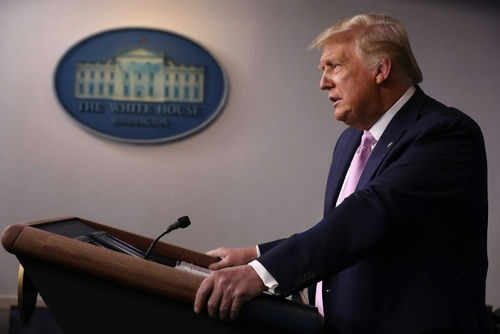
President Donald Trump’s recent remarks draw a sharp line: the United States has already “won,” yet the mission should not end prematurely. Reports of ongoing Iranian drone and missile attacks on shipping in the Strait of Hormuz complicate that message, because the constitutional duty of any commander in chief is practical security—not slogans. The emerging picture is a U.S. operation claiming decisive damage, alongside an adversary still capable of disruptive retaliation.
Trump has also signaled he can end the war whenever he chooses, while warning Iran of far harsher consequences if energy flows are threatened. That posture fits a “peace through strength” framework, but it also raises a basic question for Americans watching fuel prices and retirement accounts: if Tehran can still target ships and threaten economic pressure points, what conditions must be met before U.S. leaders call the job finished?
Operation Epic Fury: Objectives, Targets, and the Administration’s Rationale
The White House has described Operation Epic Fury as a major strike campaign against Iran’s military and nuclear-related capabilities, including targets tied to missiles and leadership nodes. The stated objective is to end the nuclear threat and break the regime’s ability to project force through terror networks and regional intimidation. Supporters argue this approach corrects years of hesitant policy and shows adversaries that America will enforce red lines instead of outsourcing security to global forums.
Even with that rationale, key uncertainties remain because independent verification of specific battlefield claims is limited in the public reporting. It indicates sweeping assessments—such as Iran being left “defenseless”—alongside continued Iranian action in the maritime chokepoint that matters most to the global economy. For a conservative audience shaped by years of inflation and energy-price shocks, the operational question is straightforward: can U.S. force secure shipping lanes quickly without drifting into an open-ended commitment?
Hormuz Disruption: The Economic Front Americans Actually Feel
The Strait of Hormuz is not an abstract map coordinate; it is a pressure valve for global energy. Reports say Iranian drones hit at least three ships and disrupted traffic, and Iranian-linked threats have reportedly extended to financial targets. That is the kind of asymmetric warfare that can ripple into oil volatility and higher costs back home. After years of fiscal strain and price hikes, voters have little patience for a regime trying to hold the world’s energy supply hostage.
Trump’s warnings that Iran would face dramatically escalated consequences if oil flow is disrupted suggest the administration is tying military success to economic stability. That is a measurable standard conservatives can evaluate: fewer attacks, safer shipping, and reduced price spikes. The tradeoff is that escalation carries risk to U.S. forces and civilians in the region, so the administration’s deterrence must be paired with clarity about mission boundaries and what “security restored” actually means.
Mixed Signals on Timing: “Soon” vs. “Don’t Leave Early”
Public reporting highlights that Trump has described the conflict with shifting language—calling it an “excursion” at one point while also labeling it a “war,” and predicting it will end “soon” because there is “nothing left to target.” At the same time, he argues for staying long enough to achieve “ultimate victory.” Those two messages can be reconciled if “soon” means major strikes conclude while containment continues, but the distinction has not been fully defined.
Iran’s leadership has projected defiance, with statements rejecting negotiation and implying Tehran—not Washington—decides when the war ends. That claim may be propaganda, but it matters because it is designed to prolong uncertainty and invite economic attrition. The conservative lens is not to demand endless war, but to insist that U.S. policy not repeat past mistakes: vague end states, mission creep, and Washington talking points that ignore what adversaries are still physically able to do.
Constitutional Stakes: Deterrence Without Endless Commitments
Americans can support decisive action against a hostile regime while still demanding accountability, lawful authority, and a clear objective tied to U.S. interests. Protecting Americans, defending allies, and keeping vital waterways open are concrete goals; “victory” rhetoric is not a substitute for those outcomes. Based on the available reporting, the administration’s challenge is to prove the operation’s strategic effect while preventing Iran from converting scattered attacks into a sustained economic weapon.
For voters exhausted by the Biden-era pattern of overseas disorder plus domestic pain, the most important metric is whether strength restores normalcy. If the regime’s capacity to threaten shipping and financial systems is truly collapsing, the benefits should show up quickly in reduced attacks and stabilized markets. If attacks persist, the White House will face pressure to explain what additional steps are necessary—and what, specifically, triggers the end of U.S. operations.
Sources:
https://www.wuft.org/2026-03-10/trump-gives-mixed-messages-about-when-the-war-with-iran-will-end