

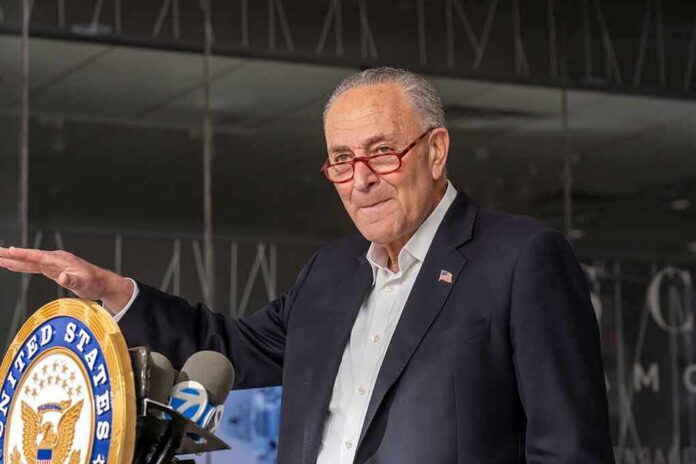
A powerful Democrat just pitched a “clean government” plan that would actually build a new permanent watchdog over President Trump and every future conservative administration.
Story Snapshot
- Chuck Schumer introduced the Anti-Corruption Bureau Creation Act to build a new independent federal agency with sweeping powers.
- The agency would replace existing ethics offices and sit on top of the executive branch with subpoena and enforcement authority.
- The bill is written in direct response to President Trump and is framed to chase his past and future business dealings.
- Private lawsuits and state attorneys general would be empowered to claw back money and drag presidents, families, and aides into court.
Schumer’s Bill: A New Federal Super-Agency Aimed at Trump
Senate Minority Leader Chuck Schumer has rolled out the Anti-Corruption Bureau Creation Act, a bill that would create a brand-new federal agency to investigate “corruption” in the executive branch. Schumer presented the bill as a response to what he calls “unprecedented corruption” in President Trump’s administration and business life. He told supporters the measure is “the biggest, boldest and broadest” effort yet to rebuild ethics rules around the presidency. In simple terms, he wants a powerful new office, built to look over President Trump’s shoulder now and for years to come.
The proposed Anti-Corruption Bureau would not be a small office inside an existing agency. It would stand alone in Washington as an “independent” bureau with authority to open investigations, issue subpoenas, and enforce penalties. Reports say it could dig into alleged abuses even after a president leaves office, meaning the reach would follow Trump and future presidents long after they step down. The Washington Post and other outlets describe it as a federal watchdog with “sweeping” power over the executive branch. That kind of reach raises real questions about checks and balances and separation of powers.
How the Bureau Would Reshape Existing Safeguards
Schumer is not just adding another layer of oversight; his bill would tear up and remake the current ethics system. The plan would fold three existing bodies — the Office of Government Ethics, the Federal Election Commission, and the Office of Special Counsel — into one new Anti-Corruption Bureau. Those offices now handle rules on conflicts of interest, campaign finance, and whistleblower protection. Under Schumer’s bill, a seven-member board, confirmed by the Senate, would run the new agency. He has said he structured the board to resist pressure from presidents who might try to stall appointments or cripple the bureau’s work.
Supporters call this a way to “bring all the guardrails under one roof,” but it also moves a lot of power away from separate agencies and into a single politically created structure. That means future major ethics fights would all funnel through one board chosen in a charged Senate process. For conservative readers, that looks less like neutral oversight and more like placing critical checks under a permanent political umbrella. When one party controls the Senate, it would have heavy influence over who sits on that board and what gets investigated.
Private Lawsuits, Money Clawbacks, and New Limits on Families
A key selling point in Schumer’s pitch is money. He said, “the first goal of our bill is to get the American people their money back,” promising that citizens could go to court if they believe Trump or his allies “stole” from them. The bill creates a “private right of action,” letting regular Americans and state attorneys general sue to recover money they claim was taken through government corruption. Fox News notes that the proposal gives priority to state cases and major claims to limit what Schumer calls “frivolous suits,” but the doorway is wide open. That means more lawyers, more lawsuits, and more pressure on any president who crosses organized activists or political rivals.
Senate Minority Leader Chuck Schumer has introduced the Anti-Corruption Bureau Creation Act, a sweeping proposal aimed at investigating alleged government corruption and presidential profiteering. pic.twitter.com/EIAwhxt6eV
— MEAWW News (@meawwcom) July 31, 2026
The bill also tightens rules on presidents, vice presidents, their spouses, adult children, and top aides, banning them from accepting items worth more than $50,000. Backers say this will stop “self-dealing,” especially around business ties and gifts. Critics point out that it gives a new agency broad room to judge what counts as a corrupt gain. The proposal also includes a 10-year statute of limitations on violations dating back to January 20, 2025, the first day of Trump’s second term. That timing shows the clear focus: Trump’s current and future business success is the central target.
What This Means for Trump Supporters and Future Presidents
For conservatives who already see federal power growing too fast, Schumer’s Anti-Corruption Bureau plan looks like another step toward a permanent political weapon. The bill is openly framed as a response to President Trump and is promoted by Democrats as a way to go after his personal wealth and business wins. Media coverage stresses how the agency could keep investigating him long after he leaves office and could dig into cryptocurrency and other new financial areas linked to his companies. Backers call that “accountability,” but many see it as chasing a political rival through the courts and bureaucracy.
At the same time, the proposal fits a familiar Washington pattern: using the language of “reform” to justify more central control over the presidency. On paper, the bureau would chase corruption in any administration. In practice, it would be born from anger at Trump, built by Senate Democrats, and armed with tools to second-guess presidents who do not share their agenda. For readers worried about government overreach, gun rights, or family businesses, this bill is a reminder that calls for “clean government” can hide new ways to regulate, investigate, and punish political opponents.
Sources:
facebook.com, youtube.com, washingtonpost.com, democrats.senate.gov, foxnews.com, x.com