
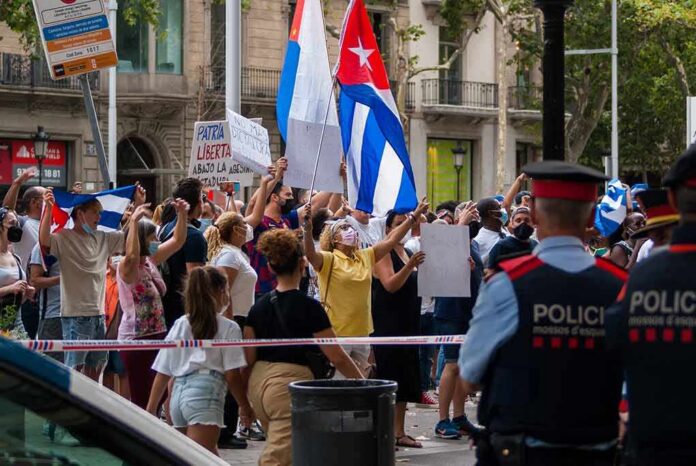
Cuba blasted Washington’s pressure campaign while President Trump said the United States likely will not need the military to secure a better deal.
Story Snapshot
- President Trump said he does not think military action against Cuba will be needed.
- The White House and State Department labeled Cuba’s regime a national security threat and expanded sanctions.
- Cuban leaders condemned U.S. “threats” and warned of severe consequences if attacked.
- Reporting says U.S. officials kept military planning on the table as a contingency.
Trump Signals Leverage Without War Talk As First Choice
President Trump told reporters on September 26 that the United States and Cuba “will make a deal” and that he did not think the military would be needed. His words set a clear tone: strong leverage first, force as a last resort. That message followed months of stepped-up pressure on Havana’s rulers. The aim, as framed by the administration, is to defend U.S. national security while pushing back on a communist regime near our shores.
Trump’s comment steered the public focus away from immediate conflict and toward results through pressure. That stance matched the administration’s broader track record. Officials moved to restrict regime cash flows and spotlight the security risk from military-linked enterprises on the island. The approach says to Havana: stop threatening U.S. interests and stop profiting from repression, or face tighter isolation. It also tells Americans the goal is safety without unnecessary war.
Sanctions Define The Policy: Target The Regime’s Cash And Control
The White House issued a fact sheet in May stating that Cuba’s regime actors pose threats to U.S. national security and foreign policy. The statement detailed new sanctions designed to hit the military and elite networks that run the economy and suppress dissent. The State Department followed by naming targeted entities and stressing that the measures are part of a broader campaign to address those threats through lawful economic tools, not automatic escalation to force.
The State Department release described sanctions that strike the regime’s key money channels and its military-linked businesses. By constraining these networks, Washington seeks to reduce the regime’s reach and limit funds that could enable hostile actions. This is a classic peace-through-strength play: use clear, legal pressure to deter danger. The message is firm but measured. The result is leverage the United States controls, rather than open-ended commitments on the ground.
Havana Denies Threat And Decries U.S. Pressure
Cuban officials answered with sharp words, denying any threat to the United States and calling U.S. steps “aggression.” President Miguel Díaz-Canel warned that any attack would create a “bloodbath,” casting blame on Washington for regional risk. These statements aim to shift the narrative, but they do not change the fact that the United States is using sanctions and diplomacy as front-line tools while keeping military options as contingencies, not automatic choices.
Havana’s rhetoric seeks sympathy abroad and pressure at home, but it sidesteps the core U.S. concern: military-linked control of the Cuban economy and repression inside the country. The United States has the right and duty to guard against nearby risks. Sanctions allow that defense while avoiding war. If the regime wants relief, it can reduce hostile activity and stop enriching military elites. Until then, Washington will act to protect Americans and uphold security standards that keep our hemisphere stable.
Contingency Planning Exists, But Policy Emphasis Is Deterrence
News reports citing unnamed U.S. officials said military planning around Cuba continued as a precaution. Such planning is normal for serious governments. It does not mean war is coming. It means the Pentagon does its job so civilian leaders have options. Trump’s on-record view that the military likely will not be needed, combined with active sanctions, shows the real policy thrust: deter threats, squeeze bad actors, and seek a deal that serves U.S. interests without costly conflict.
There are limits in the public record. Officials have not released declassified proof of an imminent Cuban attack. That gap does not negate the right to prepare. It does counsel prudence and facts first. Here, prudence looks like targeted sanctions, tighter oversight of regime businesses, and clear communication that American forces exist to defend, not to start fights. The goal is simple: peace through strength, security through pressure, and a better deal for the American people.
Sources:
local10.com, nbcmiami.com, apnews.com, en.cibercuba.com, english.aawsat.com