

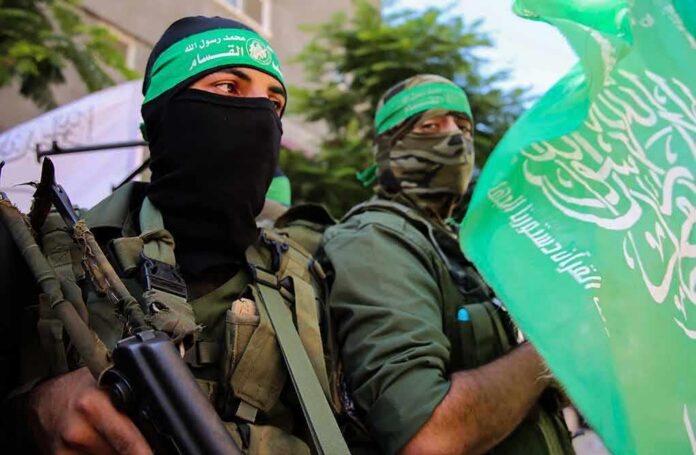
Israel says it killed a Hamas commander tied to the October 7 massacre and to the abduction of a fallen Israeli soldier’s body.
Story Highlights
- The Israel Defense Forces named Ibrahim Alam as a Hamas military-wing commander killed in a Gaza strike.
- The military linked Alam to the October 7, 2023 assault and to moving Sergeant Shaked Dahan’s body.
- Officials said Alam was planning new attacks and working to rebuild Hamas in Khan Younis.
- Israel reported using precision steps to reduce civilian harm during the strike.
IDF Identifies Target and Ties Him to October 7
The Israel Defense Forces said a strike in the Khan Younis area earlier this week killed Ibrahim Alam, whom it identified as a commander in Hamas’s military wing. The military stated Alam infiltrated Israel during the October 7, 2023 attack and took part in the murder of Israeli civilians. It also connected him to the abduction of the body of Sergeant Shaked Dahan, a tank crewman killed in the opening hours of the assault, whose remains were later recovered.
Israeli reports described Alam as a figure working with another operative on active plans to attack Israeli soldiers and civilians. The Israel Defense Forces said the pair worked to rebuild Hamas’s capabilities in Gaza after months of fighting. The announcement came on October 8, 2026, several days after the reported Monday strike. Outlets covering the strike attributed the details to official Israel Defense Forces statements issued with the update.
Strike Location, Timing, and Civilian-Risk Measures
The Israel Defense Forces placed the operation in the Khan Younis area, a sector where forces have hunted remaining Hamas cells. Officials said the strike used precision munitions and relied on aerial surveillance to lower the risk to bystanders. Those steps are consistent with the law of armed conflict principles that guide how militaries must distinguish between fighters and civilians and avoid excessive collateral damage during attacks.
Reports said the operation targeted two Hamas operatives, including Alam, and emphasized their alleged roles in both the 2023 massacre and new plots. The military framed the strike as part of an effort to stop renewed attacks and to block Hamas from restoring combat power across southern Gaza. The focus on Khan Younis reflects repeated sweeps to deny the group command space, weapons stockpiles, and tunnel access points in that urban zone.
Why This Matters to U.S. Readers
October 7 shocked the free world. Hamas terrorists crossed into Israel, butchered families, and dragged people into Gaza. When a terror commander who joined that invasion is removed, it is a blow to the network that planned and praised those crimes. Conservatives understand that stopping terror is not theory or talk; it is action that protects innocent life and deters the next attack. Allies who target the killers help uphold the basic right to live in peace.
America faces the same core test: do we reward or deter terror. President Trump has pressed partners to crush violent groups and to deny them money, weapons, and safe haven. When Israel removes a commander tied to the October 7 massacre, it reinforces that lesson. Peace does not come from speeches or United Nations scoldings. It comes when terrorists learn there is a hard price for murder and hostage-taking, and when the free world stands firm with its friends.
Claims About Sergeant Dahan’s Abduction
The Israel Defense Forces said Alam helped move the body of Sergeant Shaked Dahan into Hamas control during the first hours of the attack. Dahan served in an armored unit that fought to block the border breaches. Israeli units later recovered his remains during operations inside Gaza. The claim about Alam’s role appears across several Israeli reports that cite the official military announcement issued with the strike update on October 8, 2026.
Israeli coverage also noted that Hamas leaders have celebrated the October 7 operation as a major event. That posture hardened Israel’s resolve to target those who led, carried out, or enabled the atrocities. Tying specific operatives to defined acts, such as moving a fallen soldier’s body, shows how Israeli investigators and intelligence units work case by case to build a picture of roles and chains of command behind the assault.
Legal Framework: Distinction and Proportionality
Armed forces must follow core rules under the law of armed conflict. Those include distinction, which requires aiming at combatants, not civilians, and proportionality, which bars attacks where expected civilian harm would be excessive compared to the concrete and direct military gain. The International Committee of the Red Cross explains these standards and how they guide target validation, weapon choice, and real-time precautions during operations in dense urban areas like Gaza.
Israel’s statement that it used precision munitions and aerial surveillance speaks to these duties. The goal is to hit the target, limit blast and fragmentation, and time the strike to reduce risk to uninvolved people. These steps do not remove all danger in war, but they align with the duty to take feasible precautions. When a commander tied to mass murder and new plots is in the crosshairs, these measures help ensure the operation meets both military need and legal guardrails.
Sources:
israel.com, israelnationalnews.com, semana.com, timesofisrael.com, vinnews.com, ground.news