

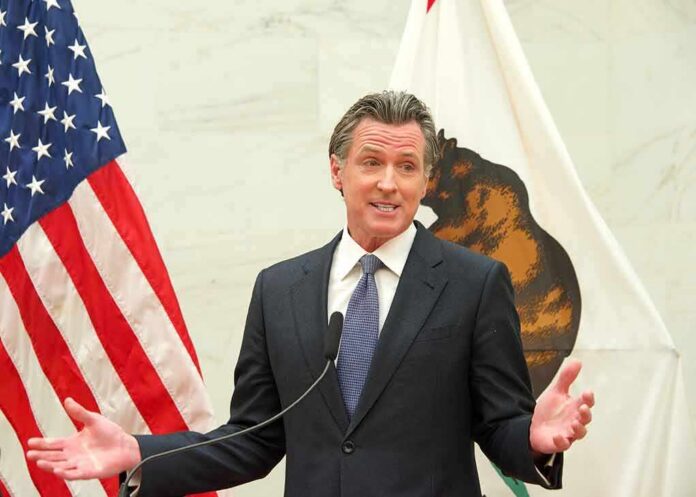
California’s governor moved to erase every death sentence at once, sidelining juries and victims across the state.
Story Highlights
- Governor Gavin Newsom said he will commute all 548 death sentences to life without parole.
- Los Angeles County District Attorney Nathan Hochman warned some inmates could later seek parole or court relief.
- The state says commutations mean permanent imprisonment, but many cases still require court review.
- Victims’ families were not consulted before the announcement, according to Hochman.
What Newsom Ordered And How It Would Work
Governor Gavin Newsom announced plans to commute every death sentence in California to life without the possibility of parole. His open letter called it the toughest punishment the state can ethically enforce and cited his constitutional clemency power. The state’s clemency page says the inmates will remain in prison and are not eligible for release. Reporters noted this action covers all 548 people on death row, applying the same change to every case.
The plan is not instant. The state says the commutations will not take effect until legal steps finish. Coverage reported that hundreds of cases require California Supreme Court review before the change becomes final in each file. This means the move rests on a process that could narrow, delay, or even outlast the governor’s term if approvals do not arrive in time. Until then, the orders exist as a promise backed by ongoing review.
Why Prosecutors And Victims Are Pushing Back
Los Angeles County District Attorney Nathan Hochman said the governor’s power allows commutations but does not end the death penalty in law. He said only the Legislature or voters can do that and pledged to keep evaluating death-eligible cases under current statutes. Hochman warned that some commuted inmates could later pursue parole or other court relief, which could send cases back into court and force new battles for families.
Hochman also said the governor did not consult victims’ families before making the news public. He argued families who sat through trials, appeals, and sentencing were left with new uncertainty and no say in a decision that reversed juries’ choices. That critique tracks with a long California split: voters rejected death penalty repeal in past elections, even as executions have not taken place in two decades.
What “Life Without Parole” Promises — And What It Does Not Settle
State materials say life without parole locks in permanent imprisonment with no release path. That claim defines the administration’s moral case: end executions while keeping society safe. But the policy depends on legal steps that are still open, including high court review for many prisoners. As long as reviews continue, the door remains ajar for litigation risks that come with any blanket action of this size and speed.
News outlets reported that the governor will apply the same commutation to every condemned person, not a case-by-case review. That approach is clear and broad, but it does not show how each case’s facts, victim input, or restitution orders were weighed. It also raises a test for the system: if even one commutation later links to a resentencing or error, critics could point to that single case as proof the uniform plan went too far, too fast.
What This Means For Public Safety And The Rule Of Law
California has not executed anyone in many years, and a 2019 moratorium already paused lethal injections. Newsom’s order tries to align practice with his ethics by ending death sentences on paper. Yet the move clashes with prior voter choices and with the expectations of families who trusted jury verdicts. The core tension is simple: who decides ultimate punishment — juries and voters, or one executive office? That question now moves from politics into court procedure.
What To Watch Next In The Courts And Counties
Watch for California Supreme Court actions on the hundreds of files that need review. Track whether prosecutors file challenges or seek limits on how commutations apply in complex cases. Look for any attempt by lawmakers or a ballot measure to clarify the state’s death penalty. County offices, led by prosecutors like Hochman, say they will keep enforcing current law and will contest any new paths that could let the worst offenders seek release or relief.
Sources:
nypost.com, gov.ca.gov, us.cnn.com, upi.com, bostonherald.com, da.lacounty.gov