
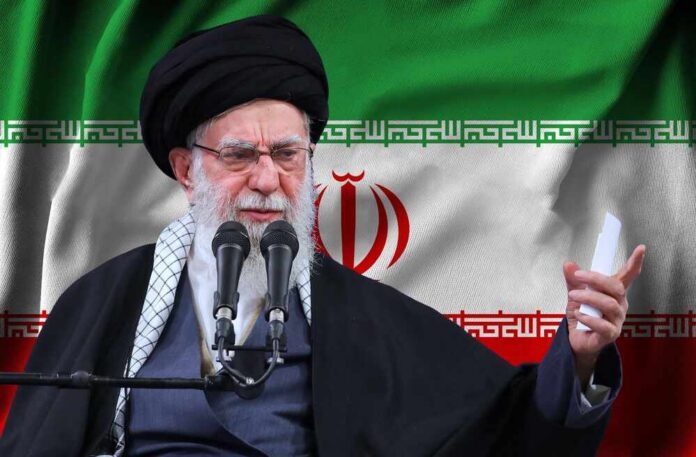
Three sons of Iran’s slain supreme leader stood by their father’s coffin, while the new ruler, Mojtaba Khamenei, stayed hidden from view amid reports of serious war wounds and ongoing assassination threats.
Story Snapshot
- Three of Ali Khamenei’s sons led funeral prayers in Tehran, but Supreme Leader Mojtaba Khamenei did not appear.
- Iranian officials blame “extreme” security risks, while Western and regional reports describe Mojtaba as severely burned and possibly maimed.
- Mojtaba has not been seen in any verified photo, video, or audio since the strike that killed his father, fueling questions about his true condition.
- Conflicting medical claims from Iran and foreign sources show how authoritarian regimes hide weakness even as enemies keep targeting their leaders.
Three Sons at the Coffin, But the New Supreme Leader Is Missing
On the main funeral day for Ayatollah Ali Khamenei, three of his sons – Masoud, Mostafa, and Meysam – appeared in public to lead prayers beside his coffin at Tehran’s Grand Mosalla mosque. Senior military commanders, clerics, and regime officials joined them as hundreds of thousands of mourners filled the site in a show the theocracy hoped would signal strength after months of war with the United States and Israel. Foreign dignitaries were limited, underscoring how isolated this radical regime remains on the world stage.
Iran’s new supreme leader, Ayatollah Mojtaba Khamenei, was nowhere to be seen. He was appointed as successor in March after the February 28 strike that killed his father, but since that day he has not appeared in any public video, photograph, or audio message. State television instead reads his written statements on air, an unusual pattern for a man who now controls Iran’s military, intelligence services, and nuclear program. That absence at his own father’s funeral is raising alarms far beyond Iran’s borders.
Tehran Cites Assassination Fears, While Outside Reports Describe Severe Wounds
Iranian officials say Mojtaba wanted to attend the funeral and lead the main prayer but was blocked by security services, who warned that Israel and the United States still “have him on the hit list” and can track him with advanced technology. A representative of the supreme leader in India told local media that security forces considered any public appearance “very dangerous” and insisted they could not guarantee his safety. Iran’s Islamic Revolutionary Guard Corps publicly warned of attempts to target the country during the funeral period, which authorities treated as a high-risk window.
Western and regional reporting paints a much darker picture of Mojtaba’s physical condition. Reuters, citing people close to his inner circle, reports he suffered severe facial disfigurement and major leg injuries in the February 28 airstrike on the supreme leader’s compound. The New York Times, quoting four Iranian officials, says one leg has undergone three surgeries and may require a prosthetic, while his face and lips were badly burned, making speech difficult. An NBC report and similar coverage describe burns to his face and body and significant leg trauma that needed multiple operations. These accounts agree on one point: the new leader is mentally alert but physically damaged.
Iran’s Health Ministry Downplays Injuries, Highlighting Regime Survival Tactics
Iran’s Health Ministry and officials close to Mojtaba strongly deny claims of severe wounds. A senior ministry spokesman said Mojtaba suffered only superficial cuts and a minor leg injury needing “a few stitches,” insisting “nothing serious happened” to his face or limbs. Another official from the leader’s office described him being knocked down by a blast wave and treated for a back injury, a kneecap problem, and a “small scratch” behind his ear, before declaring the supreme leader “in full health.” These statements are clearly meant to counter outside talk of amputations, plastic surgery, or a possible coma.
Political researchers note that such vague “wounded but fine” stories are common in authoritarian systems that fear coup attempts and elite defections when a ruler looks weak. Studies of leadership succession in personalist dictatorships like North Korea and parts of Central Asia show that regimes often admit an injury while hiding its severity to project control and prevent a power vacuum. Iran’s mixed messages about Mojtaba – acknowledging he was hurt, but insisting he is healthy and active – fit this pattern of trying to reassure insiders while hiding vulnerability from enemies and the public.
What Mojtaba’s Hidden Condition Means for Iran – and for America
Months after the strike, there is still no independent medical record, hospital report, or verified image showing Mojtaba’s true condition. Rumors range from “superficial cuts” to “awaiting a prosthetic leg” or even being in a coma. Meanwhile, Iranian state media calls him a “janbaz,” a word for someone seriously wounded in battle, while also claiming he is fully capable of leading the country. This unresolved picture matters because a crippled or invisible supreme leader can push desperate regimes toward more proxy attacks, terrorism, or nuclear brinkmanship to prove they are still strong.
Three sons of former Iranian supreme leader Ali Khamenei made a rare public appearance at his funeral on Sunday, but there was still no sign of their brother and his successor Mojtaba Khamenei. https://t.co/XRSYo1j7OP
— CBS News (@CBSNews) July 5, 2026
For American readers, this funeral drama is another reminder of how hostile regimes work behind closed doors. Iran’s rulers chant for violence against the United States and Israel even as they hide their own weakness from their people. When a radical theocracy that funds terrorists and threatens our allies cannot even show its leader in public, it tells us the pressure is working – but also that the danger is not over. A wounded, cornered regime can be just as reckless, which is why clear eyes and strong defense remain essential.
Sources:
youtube.com, theweek.in, reddit.com, jpost.com, instagram.com, nytimes.com, facebook.com, iranintl.com, timesofindia.indiatimes.com, nbcnews.com, edwardgoldring.com, polisci.ucsd.edu, files.ethz.ch, cambridge.org, fiia.fi