
Germany is warning that Israel’s Lebanon operation must stay inside strict “self-defense” limits—an unusually pointed message from a close Western ally as the region teeters on wider war.
Quick Take
- Germany’s foreign minister directly urged Israel on April 8 to restrict its Lebanon campaign to actions justified as self-defense under international law.
- Israel renewed strikes and evacuation orders in southern Lebanon even as Hezbollah claimed no operations after April 7, raising questions about necessity and proportionality.
- Germany previously cautioned that a major ground offensive would worsen displacement and humanitarian conditions, citing a rising civilian toll reported by Lebanon’s health ministry.
- Israel argues a separate U.S.-Iran truce does not apply to Lebanon and says the “battle in Lebanon” remains ongoing.
Germany Draws a Harder Line With Israel on “Self-Defense”
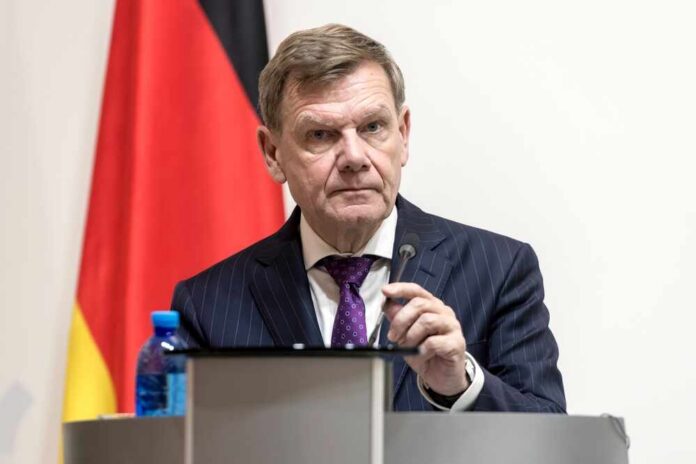
Germany’s government moved from broad caution to a sharper legal message on April 8, when Foreign Minister Johann Wadephul told Israel to limit military actions in Lebanon to self-defense. German officials framed the issue as a test Israel must be able to justify under international law, not simply a strategic preference. For many Americans watching a volatile Middle East, the subtext matters: even close allies are signaling that legitimacy, not just firepower, will shape international support.
Israel’s posture has been that threats emanating from Lebanese territory remain active and that any U.S.-Iran ceasefire does not cover Lebanon. Israeli messaging emphasized that operations against Hezbollah continue as a distinct theater. The gap between Germany’s demand for a clear self-defense rationale and Israel’s insistence on operational independence highlights a recurring wartime dilemma: democratic states want security, but they also need credible legal and moral boundaries to sustain alliances and avoid long-term blowback.
Strikes and Evacuations Continue Despite a Reported Hezbollah Lull
Reports described Israel renewing strikes in southern Lebanon and issuing evacuation orders, including around the Tyre area, even though Hezbollah had not claimed operations since April 7 at 2200 GMT. That timing is central to Germany’s concern, because it shifts the debate from immediate retaliation to whether continued bombing and displacement are strictly necessary for defense. When civilians are ordered to move under fire, the “why now” question becomes inseparable from legality and proportionality.
Germany’s earlier warnings also focused on the practical consequences of escalation. On April 6, German statements cautioned against expanding a ground offensive, arguing it would worsen displacement and intensify a humanitarian crisis. Israel acknowledged “limited and targeted ground operations” aimed at Hezbollah infrastructure. The operational description—limited, targeted—matters politically, because it suggests Israel is trying to keep actions within a defensible scope, while Germany is effectively demanding proof that those limits are real and enforceable.
The Human Toll Raises Pressure on Allies—and Fuels Public Distrust
Lebanon’s health ministry toll cited in reporting put deaths at 886 by early April, including women, children, and health workers, alongside thousands wounded. Those figures add urgency to Germany’s stance because civilian harm quickly becomes the metric by which outside governments judge whether “self-defense” has become open-ended warfare. For American audiences already skeptical of institutions, this is the familiar pattern: distant conflicts become domestic political flashpoints when leaders appear unable to define clear goals, endpoints, and accountability.
Annexation Talk and Occupation Questions Complicate the Legal Debate
Another point raised in coverage is Germany’s criticism of any Israeli threats to annex parts of southern Lebanon as illegal. German officials also acknowledged that an occupation can be viewed “in different ways,” reflecting uncertainty about where temporary operations end and a more permanent presence begins. From a conservative, limited-government perspective, this is exactly where security policy can drift: missions expand, authorities stretch definitions, and temporary powers start looking like permanent commitments—often without transparent public consent.
In the near term, the most consequential issue is whether the Lebanon front escalates through a larger ground campaign or stabilizes through diplomacy. Germany welcomed signs of renewed Israel-Lebanon talks in related reporting, but the facts on the ground—strikes, evacuations, and competing claims about continuing threats—make de-escalation hard. The broader lesson for Americans is sobering: when major powers and proxies collide, ceasefires can become fragmented by theater, leaving civilians caught between legal arguments and kinetic reality.
Sources:
Germany calls on Israel to limit Lebanon campaign to ‘self-defence’
Germany urges Israel not to expand ground offensive in Lebanon
Germany warns major Israeli ground campaign in Lebanon would worsen humanitarian
Germany urges Israel to abandon Lebanon ground offensive plans
Germany slams Israeli threats to annex southern Lebanon
Germany warns major Israeli ground campaign in Lebanon would worsen humanitarian situation