
Florida just moved to put the power to label “domestic terrorist organizations” into state law—raising a sharp question about where security ends and political speech begins.
Quick Take
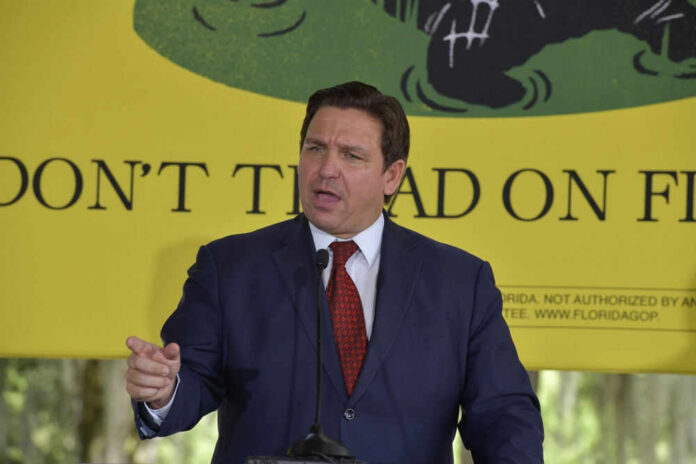
- Gov. Ron DeSantis signed HB 1471 after Florida lawmakers approved it with large GOP majorities, creating a state process to designate “domestic terrorist organizations.”
- The law follows a federal judge’s injunction blocking DeSantis’ earlier executive order that named CAIR and the Muslim Brotherhood, with the court citing First Amendment problems.
- Supporters say Senate changes narrow the bill so “promoting” terrorism means supporting or encouraging violence, not simply expressing controversial views.
- Critics—including PEN America—warn the designation system lacks strong guardrails and could chill speech, especially for nonprofits and campus activity.
What DeSantis Signed and What It Authorizes
Florida’s new law, HB 1471, establishes a state-level pathway for labeling certain groups “domestic terrorist organizations,” with the Florida Department of Law Enforcement playing a central role and the final approval resting with the governor and Cabinet. The legislation also aims at downstream effects, including restrictions tied to state funding and program support connected to designated groups. Lawmakers framed the measure as a security response, while opponents focused on process and civil liberties.
State action in this area matters because the “terror” label carries consequences even when it is not a criminal conviction. Florida’s approach is designed to formalize a tool that previously existed mainly through federal designations and criminal prosecutions, and it arrives amid ongoing public tension over extremism, campus activism, and post–October 7 politics. For conservatives, the core appeal is preventing taxpayer-supported institutions from enabling groups tied to violence; for civil-liberties advocates, the worry is vagueness and selective enforcement.
The Court Fight That Set the Stage
HB 1471 did not appear in a vacuum. In December 2025, DeSantis issued an executive order designating CAIR and the Muslim Brotherhood as terrorist organizations. In early March 2026, U.S. District Judge Mark Walker issued a preliminary injunction blocking that order, finding constitutional issues and warning that the order operated as a political statement that burdened protected rights. That ruling left Florida’s executive approach stalled even as lawmakers pursued a statutory workaround.
The legislative push that followed reflects a familiar pattern in American politics: when courts block an executive action, legislators try to rebuild the same policy with new language and a more durable legal foundation. Florida’s Republican majorities advanced HB 1471 quickly, with reported votes of 80–25 in the House and 25–11 in the Senate. The bill was also part of a broader end-of-session bundle that included election-related measures, underscoring how major policy fights often move together when political momentum is highest.
Campus and Funding Provisions Put Speech Under the Microscope
One of the most contested elements is how the law intersects with universities and student conduct. Senate changes were described as narrowing the meaning of “promote” to actions that support or encourage violence, rather than mere speech, which supporters say is essential for protecting First Amendment activity while still targeting material backing for terrorism. Even with that clarification, the practical challenge for administrators is separating heated political expression from conduct that crosses into encouragement or support for violence.
The law also touches state funding and K–12-related programs, including bans tied to school programming connected to designated organizations, and it includes provisions aimed at blocking enforcement of foreign religious law such as Sharia in Florida. Those anti-Sharia themes have appeared in prior Florida debates, and they resonate with voters who want U.S. constitutional norms to remain the only governing framework in American courts. The key legal test, however, will likely be whether the law is applied narrowly enough to avoid punishing lawful association and advocacy.
Due Process Concerns and the “Deep State” Problem Americans Agree On
Democratic lawmakers and Muslim advocacy groups criticized the bill by pointing to what they view as weak due process protections for organizations facing designation, along with the risk that supporters and affiliates could be swept into consequences without clear avenues to contest the state’s claims. PEN America echoed a related warning: sparse guidelines can invite abuse and chill dissent, especially when nonprofits fear that ordinary advocacy could be reframed as “promotion” if politics shifts.
This is also where today’s broader public frustration with government lands, on both the right and the left. Americans see institutions using expansive labels—whether “terrorist,” “extremist,” or “misinformation”—and worry the machinery of government can be turned against ordinary citizens who dissent from the ruling consensus. Conservatives are right to demand strong security tools against violence, but limited government requires equally strong guardrails: transparent standards, meaningful review, and enforcement aimed at conduct, not disfavored viewpoints.
Sources:
Domestic terrorism designation bill heads to Gov. DeSantis’ desk
Muslim groups, Democrats slam bill passage giving state power to designate terrorist organizations
Warning that Florida domestic terror bill likely would chill free speech
Florida Legislature sends domestic terrorist bill DeSantis
Miami Herald state politics article315001969