
Europe’s leaders, spooked by America’s America First stance under President Trump, commit $840 billion to massive rearmament against Russia—exposing NATO’s fragility and the perils of relying on globalist alliances.
Story Highlights
- French President Macron labels Russia a direct threat, pushes EU for $840 billion defense surge including $160 billion loans for munitions, drones, and AI.
- EU summit approves plans amid Ukraine aid blocks by Hungary’s Viktor Orbán, highlighting fractures in European unity.
- France accelerates to €64 billion ($74 billion) defense budget by 2027, revives voluntary military service for youth starting 2026.
- Macron offers nuclear deterrence sharing, reducing dependence on U.S. amid fears of NATO pullback.
Macron Declares Russia a Threat
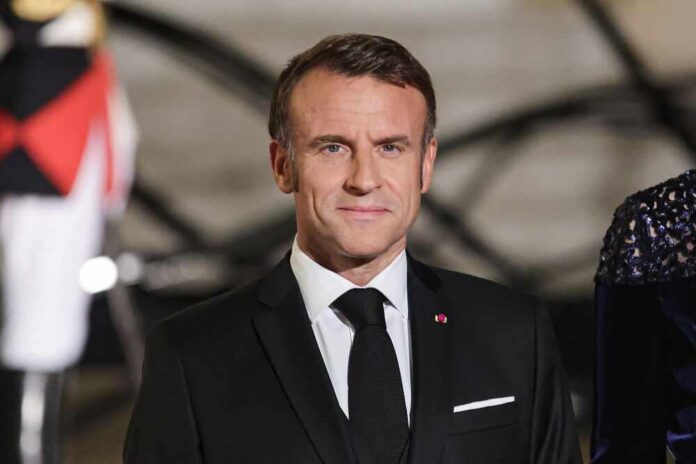
French President Emmanuel Macron delivered a televised address on Wednesday, naming Russia a direct threat to France and Europe. He urged immediate EU military spending boosts ahead of a Brussels summit. EU leaders from 27 nations responded Thursday by approving up to $840 billion in long-term defense investments. This includes $160 billion in loans targeted at munitions, drones, AI systems, and artillery to counter Russian moves in Ukraine. Macron framed this as entering a new era of vulnerability due to Russia’s invasion and potential U.S. NATO shifts.
France Accelerates Domestic Rearmament
France plans to reach a €64 billion ($74 billion) annual defense budget by 2027, three years ahead of schedule, with an extra €3.5 billion added to the 2026 allocation. This follows a December 10, 2025, parliamentary vote of 411-88 supporting a €6.7 billion increase for 2026, despite divisions. Far-right RN and left-wing LFI parties downplayed the Russia threat, focusing on budget strains. Macron also launched the next-generation nuclear aircraft carrier PANG to replace the Charles de Gaulle and ramp up SAMP/T air defense production over U.S. Patriots.
Reviving National Service Amid Rising Tensions
France will introduce voluntary 10-month military service for 18-19-year-olds starting summer 2026, limited to French soil unless a crisis triggers mandatory participation. The nation aims to grow active personnel from 200,000 to 210,000 and reservists from 40,000 to 100,000 by 2030. French General Fabien Mandon warned Russia prepares confrontation by 2030, stating Europe must accept losses. This builds reserves without full conscription, addressing Ukraine war lessons and broader aggression fears.
EU-Wide Push and Internal Divisions
EU Commission President Ursula von der Leyen called Russia a clear danger, stressing self-protection. Hungary’s Viktor Orbán blocked some Ukraine aid specifics at the summit, reflecting his pro-Russia leanings. France, as Europe’s key nuclear power alongside the UK, offers extended deterrence. The $840 billion plan loosens budgets for quick procurement but strains social spending across the EU. Taxpayers face trade-offs as defense crowds out welfare, echoing frustrations with elite priorities over citizens’ needs.
Implications for Global Security
Short-term, Europe gains munitions and AI stocks; long-term, France bolsters nuclear edge and personnel for deterrence. This reduces U.S. reliance, aligning with President Trump’s push for allies to shoulder NATO burdens. Yet Orbán’s opposition and French parliamentary rifts reveal shaky consensus. Military experts affirm the existential challenge but question funding sustainability amid high debt. Americans weary of endless foreign entanglements see validation: self-reliant defense protects sovereignty without bankrupting nations for vague alliances.
Sources:
Europe on edge: Macron calls Russia a ‘threat’ as EU races toward massive rearmament
Rearming France: Can Macron secure the nation’s future?
No consensus on Russian threat in French parliament defense debate
France reveals new national military service amid fears of Russian threat