
A pro-Palestinian activist who wished “freedom and justice for everyone (but Jews)” is now at the center of a legal fight that could reshape how far the government can go in punishing speech it claims harms U.S. foreign policy.
Story Snapshot
- A Columbia activist, **Mahmoud Khalil**, was detained 104 days and faces deportation after anti-Israel protests.
- A New Jersey judge said his detention was likely unconstitutional and based on political speech, then ordered his release.
- An immigration judge and the Trump administration argue his views cause “adverse foreign policy consequences” and that he lied on immigration forms.
- A federal appeals court later reversed the release on jurisdiction grounds, leaving free speech and national security in tension.
How a campus protest turned into a test of immigration power
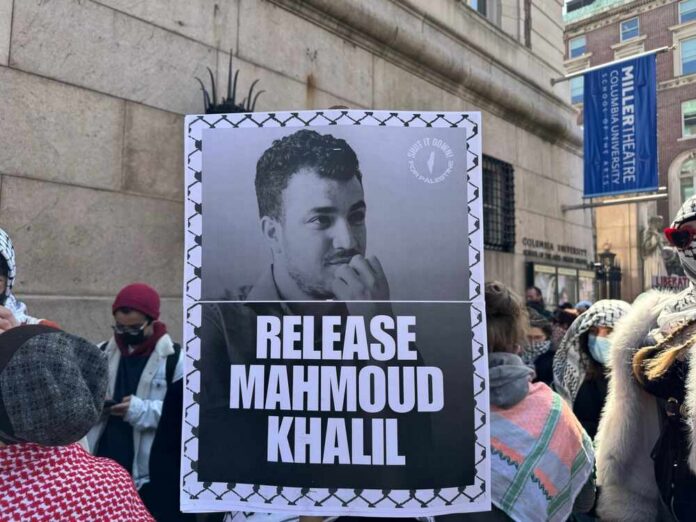
Mahmoud Khalil is a Columbia University graduate and lawful permanent resident who helped lead the Gaza Solidarity Encampment during Israel’s war in Gaza. He took part in loud, pro-Palestinian protests that many Jewish students and observers saw as hostile to Israel and, at times, to Jews themselves, including an Independence Day post framed as “freedom and justice for everyone (but Jews)” that drew sharp criticism online. Officials say his activism reached beyond campus and into U.S. foreign policy debates.
On March 8, 2025, Immigration and Customs Enforcement officers arrested Khalil and sent him 1,300–1,400 miles away to a detention center in Louisiana, far from his pregnant U.S.-citizen wife and his lawyers. He was held for 104 days while the Trump administration pushed to deport him, making his case the first known deportation effort tied directly to pro-Palestine activism during President Trump’s second term. Supporters say this was targeted retaliation for speech. The administration says it was lawful immigration enforcement.
Two judges, two very different views of the case
Inside the immigration system, Judge Jamee Comans in Louisiana ruled that Khalil could be deported, relying heavily on a letter from Secretary of State Marco Rubio. That letter claimed Khalil’s beliefs and activism created “adverse foreign policy consequences” for the United States, a Cold War–era ground for removal that lets the government say a noncitizen’s presence hurts U.S. interests. Comans also accepted accusations that Khalil misled officials on his green card application, saying he “intentionally misrepresented significant facts.”
In federal district court, a very different picture emerged. Judge Michael Farbiarz in New Jersey paused the deportation on April 1, 2025, then closely examined the law the government used. On May 28, he ruled that the Immigration and Nationality Act provision invoked against Khalil was likely unconstitutional because it was too vague when applied to speech inside the United States. Farbiarz said an ordinary person would have no fair warning that pro-Palestine advocacy could trigger deportation under that clause. He then ordered Khalil released on bail, noting Khalil was not accused of violence and was unlikely to flee.
Appeals court steps in and narrows the path for free speech claims
The Trump administration appealed Farbiarz’s ruling, arguing that a New Jersey judge had no business ordering the release of someone held in Louisiana and that immigration courts must act first. On January 15, 2026, the Third Circuit Court of Appeals agreed in a 2–1 decision, saying federal courts lack subject matter jurisdiction over ongoing immigration proceedings until those cases are fully exhausted. The appeals court did not decide whether Khalil’s detention violated the First Amendment; it focused only on procedure.
Civil liberties lawyers, including the American Civil Liberties Union, warn this jurisdiction rule is a big problem for immigrant activists. It means people like Khalil may have to endure months or years of detention before any federal court can hear their free speech claims. One legal analysis notes this fits a broader, bipartisan pattern where immigration law gets weaponized to punish political dissidents, especially those who sharply criticize U.S. policy. For conservative readers, that raises a hard question: how do we defend strong borders and national security without turning powerful tools of immigration law into a backdoor speech code?
Free speech, anti-Jewish rhetoric, and the line between dissent and danger
Khalil and his supporters insist his arrest “was a direct consequence of exercising my right to free speech” as he called for a free Palestine and attacked Israel’s actions in Gaza. They say the government’s main “evidence” is his activism and words, not any crime. They point to his long detention, the warrantless arrest claims, and the move to ship him far from his family as proof that officials wanted to send a chilling message to other activists. Critics, including many conservatives, see another side: speech that targets Jews, questions Israel’s right to exist, or excuses terror can look less like peaceful dissent and more like a security threat.
Social media commentary and outlets like Twitchy have underscored that point by flagging Khalil’s “freedom and justice for everyone (but Jews)” line as anti-Jewish, not simply anti-war. That framing matters in today’s climate, where antisemitic incidents are rising and foreign powers openly use propaganda to weaken Western allies. The Trump administration argues that in such cases, foreign policy and national security must come first, and that immigration enforcement is a legitimate way to deal with noncitizens whose activism they say crosses the line from protest into harm.
However, legal scholars across the spectrum warn that if speech alone becomes enough to trigger detention or deportation, the United States begins to look less like a free republic and more like a place where the government can exile people for their views. For conservatives who value both the First Amendment and a strong, sovereign immigration system, the Khalil case is a reminder to watch closely: defend the country from real threats, yes — but demand clear laws, honest evidence, and respect for constitutional rights, even when the speaker’s message is one we strongly reject.
Sources:
twitchy.com, aclu.org, aclu-nj.org, apnews.com, youtube.com, instagram.com, columbiaspectator.com, austinkocher.substack.com, escholarship.org, aila.org