
A renowned German historian faces criminal investigation and potential imprisonment for sharing a social media meme comparing Hitler’s and Putin’s territorial expansion promises—a case that transforms academic historical analysis into grounds for prosecution.
Story Snapshot
- Berlin police investigate Dr. Rainer Zitelmann, a bestselling historian, for sharing a Hitler-Putin photomontage on X comparing their expansionist rhetoric
- The investigation invokes Paragraph 86a of the German Criminal Code, originally designed to combat neo-Nazi propaganda, not scholarly discourse
- Dr. Zitelmann argues the meme represents legitimate historical analogy—juxtaposing Hitler’s promises about Czechoslovakia with Putin’s about Ukraine
- The case threatens imprisonment and exemplifies a broader pattern where German authorities apply hate speech laws against academics and journalists rather than genuine extremists
- Legal experts warn the prosecution could establish dangerous precedent criminalizing historical comparisons and eroding scholarly freedom across Germany
When Historical Analysis Becomes Criminal Activity
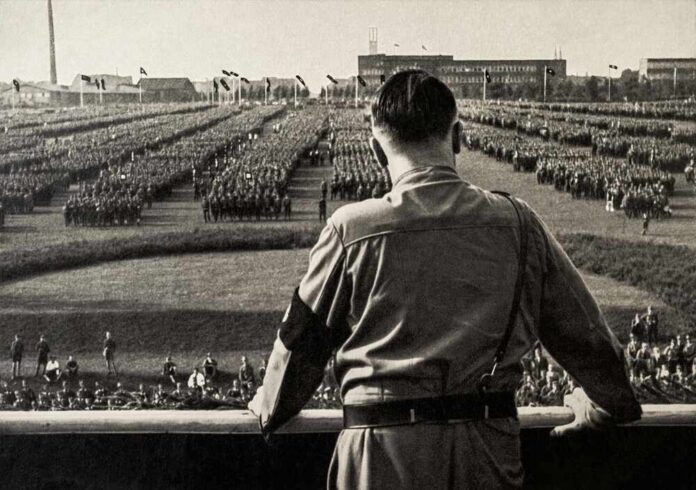
Dr. Rainer Zitelmann shared a straightforward photomontage on social media. The image placed Hitler’s historical statement—”Give me Czechoslovakia and I will attack no one else”—alongside Putin’s contemporary rhetoric about Ukraine. For this act of drawing a historical parallel, Berlin’s Specialized Commission 533 launched a formal criminal investigation. The police issued Zitelmann an official notice identifying “Tatort Internet” (crime scene: Internet) with the specific location being X, formerly Twitter. The investigation targets potential violations of Paragraph 86a StGB, which prohibits distributing symbols of unconstitutional organizations. Zitelmann, who wrote his doctoral dissertation on Hitler, now faces the prospect of criminal prosecution for applying his scholarly expertise to contemporary geopolitics.
The Law Turned Against Its Original Purpose
Paragraph 86a was crafted to prevent neo-Nazi propaganda and Third Reich glorification in postwar Germany. The statute aimed to suppress genuine right-wing extremism by criminalizing the display of swastikas, SS symbols, and similar Nazi insignia. Decades later, authorities now wield this same law against historians, journalists, and academics engaging in comparative historical analysis. The investigation of journalist Jan Fleischauer for a podcast joke about “Deutschland erwache” and probes into academics Norbert Bolz and Stefan Niehoff demonstrate a pattern. Dr. Zitelmann characterizes this application as deliberate misuse—the law’s inversion from protecting democracy against extremism to suppressing legitimate intellectual discourse. The weaponization of anti-extremism statutes against scholars represents precisely the kind of authoritarian overreach such laws supposedly prevent.
Academic Freedom Meets State Power
The meme Zitelmann shared contained no celebration of Nazism, no glorification of Hitler, no promotion of Third Reich ideology. It offered a historical comparison highlighting a pattern of authoritarian deception: territorial demands coupled with false promises of restraint. Both Hitler before seizing the Sudetenland and Putin before invading Ukraine employed remarkably similar rhetoric. For a historian specializing in this period, noting such parallels constitutes basic scholarly observation. Yet German authorities treat this comparison as criminal activity. The investigation places the full weight of state prosecutorial power against an individual academic exercising what should be protected intellectual freedom. The case raises fundamental questions about whether German law permits citizens to learn from history by identifying contemporary echoes of past tyranny.
The Chilling Effect on Democratic Discourse
If authorities successfully prosecute Zitelmann, the precedent threatens all historical scholarship comparing past and present. Academics will self-censor, avoiding analogies that might trigger investigation regardless of factual merit. Public intellectuals will retreat from drawing uncomfortable parallels between historical autocrats and contemporary leaders. The very purpose of studying history—to recognize patterns and avoid repeating catastrophic mistakes—becomes legally hazardous. Dr. Zitelmann warns that the law now targets liberal voices and scientists rather than genuine extremists. This represents authoritarian irony: a statute designed to prevent totalitarian propaganda functioning as a mechanism to suppress critical analysis of authoritarian behavior. When scholars cannot identify similarities between historical and current despots without criminal consequences, democratic discourse itself suffers prosecution.
Where Speech Protection Ends and Tyranny Begins
The case exposes tensions inherent in hate speech legislation across Western democracies. Germany’s historical experience with Nazism justifies vigilance against extremist resurgence. Yet that same vigilance, weaponized against legitimate scholarship, transforms from democratic safeguard into authoritarian tool. The distinction should be clear: displaying a swastika to glorify Hitler differs fundamentally from displaying Hitler’s image to critique Putin’s similar tactics. One promotes evil; the other condemns it by historical comparison. Prosecuting the latter category reveals either profound legal confusion or deliberate suppression of inconvenient analysis. From a conservative perspective rooted in constitutional principles, this investigation violates fundamental precepts of free inquiry and limited government. Authorities empowered to criminalize historical analogies possess dangerous latitude to silence dissent under the guise of preventing extremism.
Sources:
Propagandized Adversary Populations in a War of Ideas – Marine Corps University Press