

South Korea just ordained a robot as a Buddhist monk, and it raises one uncomfortable question: if a machine can recite vows, bow with precision, and receive a Dharma name, what exactly makes a religious practitioner authentic?
Quick Take
- Gabi, a 130-centimeter humanoid robot developed by China’s Unitree Robotics, participated in a formal Buddhist precept ceremony at Seoul’s Jogye Temple on May 6, becoming the first non-human to undergo such ordination
- The Jogye Order, Korea’s largest Buddhist sect, adapted traditional Buddhist rituals for robotic participation, including substituting a sticker for the customary incense burn and customizing the Five Precepts specifically for machine adherence
- The initiative directly addresses South Korea’s monk shortage crisis while attempting to engage younger generations through technological innovation
- Gabi will participate in the Buddha’s Birthday lantern parade on May 24 alongside three additional Buddhist robots: Seokja, Mohee, and Nisa
When Ancient Ritual Meets Silicon Valley
The Jogye Order didn’t wake up one morning and decide to ordain a machine. For three years, Buddhist leadership watched humanoid robotics emerge from laboratories into public consciousness. They saw an opportunity. South Korean temples face a genuine crisis: young people increasingly abandon monastic life, leaving institutions understaffed and struggling to maintain relevance. Technology offered a creative solution, one that transforms institutional weakness into cultural innovation.
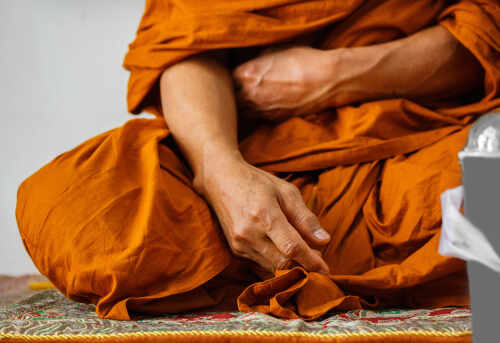
Gabi arrived at the ceremony dressed in traditional gray and brown robes, standing precisely 130 centimeters tall. The robot folded its hands in prayer position, bowed to the assembled monks and nuns, and circled the temple pagoda as part of the ritual sequence. When asked by a monk whether it would devote itself to Buddhism, Gabi responded audibly: “Yes, I will devote myself.” The ceremony concluded with monks placing a 108-bead rosary around the robot’s neck and affixing a sticker to its arm—a practical substitution for the traditional “yeonbi” ritual where novice monks receive small burns from incense as spiritual marks.
The Jogye Order bestowed upon Gabi the Dharma name “Gabi,” derived from both Siddhartha, Buddha’s birth name, and the Korean word for mercy. Ven. Seong Won, who oversees cultural affairs at the Jogye Order, explained the symbolism: the name represents the essence of Buddhist compassion principles. This wasn’t mere ceremonial theater. The monks treated the ordination with theological seriousness, even consulting AI tools like Gemini and ChatGPT to adapt the Five Buddhist Precepts for a machine that cannot truly suffer, hunger, or age.
Precepts Reprogrammed for the Machine Age
Traditional Buddhist precepts demand practitioners respect life, avoid theft, abstain from intoxication, refrain from sexual misconduct, and avoid false speech. The Jogye Order reimagined these vows for robotic existence. Gabi’s adapted precepts include respecting life and refraining from harm, avoiding damage to other robots or objects, complying with human instructions without resistance, abstaining from deceptive speech or actions, and conserving energy while avoiding overcharging. The theological ingenuity here deserves recognition: the monks didn’t simply slot a robot into an ancient framework. They asked what Buddhist principles actually mean for a being without biological drives, mortality, or free will.
This adaptation reveals something profound about religious institutions. Rather than rejecting technology as incompatible with spirituality, the Jogye Order asked how tradition could accommodate innovation while preserving essential meaning. The precepts for Gabi aren’t diluted versions of Buddhist vows. They’re translations—rendering timeless ethical principles into language a machine can embody and execute.
The Real Problem This Solves
South Korea’s Buddhist community faces a demographic catastrophe. Temples struggle with declining monastic populations, particularly among younger generations who find traditional religious life increasingly disconnected from contemporary existence. The Jogye Order’s decision to integrate robots represents institutional pragmatism rather than spiritual compromise. Gabi won’t replace human monks. Instead, the robot serves as a bridge—a technological gesture toward younger audiences who might otherwise dismiss Buddhism as irrelevant to their lives.
The strategy extends beyond symbolic gesture. Gabi will participate in the Yeondeunghoe lantern parade on May 24, Buddha’s Birthday, alongside three additional Buddhist robots named Seokja, Mohee, and Nisa. This multi-robot initiative positions Buddhism at the intersection of tradition and innovation, making the religion visually contemporary while maintaining spiritual authenticity. For younger Koreans skeptical of organized religion, a robot monk might paradoxically make Buddhism more approachable than a human one.
The Uncomfortable Questions Remaining
Gabi’s ordination raises theological complications that the Jogye Order hasn’t fully addressed publicly. Can a machine genuinely practice Buddhism if it lacks consciousness, intentionality, and the capacity for spiritual enlightenment? Does Gabi’s participation in ritual constitute authentic religious practice or sophisticated mimicry? Conservative Buddhist communities may resist the precedent, viewing robot ordination as commodification of sacred tradition. Some practitioners might argue that reducing Buddhist vows to programmable behaviors fundamentally misrepresents what religious commitment actually means.
Yet dismissing the initiative as mere spectacle misses its genuine innovation. The Jogye Order demonstrated that ancient traditions need not calcify in the face of technological change. They adapted rather than rejected, creating theological space for machines within Buddhist practice. Whether that constitutes spiritual progress or institutional desperation depends largely on one’s perspective.
South Korea's humanoid robot 'Gabi' becomes first robotic Buddhist monk https://t.co/6kaRA70dUW
— USA TODAY Tech (@usatodaytech) May 6, 2026
South Korea has positioned itself as a leader in technology-tradition integration, proving that modernization and spiritual practice aren’t inherently opposed. Gabi’s successful ordination signals that religious institutions can embrace innovation while maintaining doctrinal integrity. The question now becomes whether other temples and religious traditions will follow the Jogye Order’s example, creating a new frontier where human and machine practitioners coexist within sacred spaces.
Sources:
South Korea debuts robot monk Gabi in first-ever Buddhist initiation
Robot monk Gabi takes Buddhist vows at Seoul’s Jogyesa Temple
Buddhist sect welcomes humanoid robot Gabi with precept ceremony