

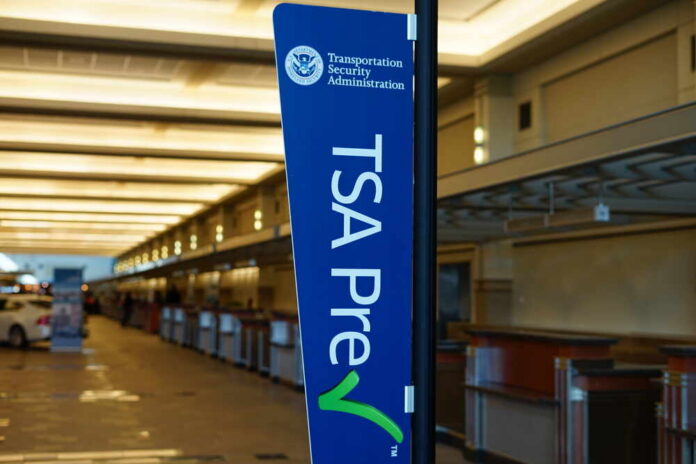
Washington’s shutdown brinkmanship is now forcing tens of thousands of airport security officers to work without a paycheck—right as travel delays and staffing losses mount.
Story Snapshot
- A Department of Homeland Security funding lapse that began Feb. 14 has pushed TSA officers into missed pay, with the first fully missed paycheck hitting March 13.
- President Trump publicly thanked TSA staff for reporting to work, while blaming Senate Democrats for blocking a funding deal.
- Airline CEOs warned Congress that missed pay is “simply unacceptable” and urged immediate funding plus reforms to prevent future shutdown pay crises.
- Operational strain is showing up in longer lines, a checkpoint closure in Philadelphia, and unscheduled absences that have more than doubled.
- The Senate failed to advance a DHS funding bill after it received 51 votes, short of the 60 needed to clear the chamber.
Shutdown Timeline Puts TSA on the Front Lines Without Pay
Federal funding for the Department of Homeland Security lapsed Feb. 14, triggering a partial shutdown that has dragged on into mid-March. TSA officers fall into the category of essential personnel, meaning they must keep screening travelers even when funding runs out. That reality became more tangible on Friday, March 13, when TSA agents received their first fully missed paycheck. While back pay is typical after funding resumes, families still face bills in the meantime.
President Trump addressed the crisis directly on Saturday, March 14, issuing a social media message thanking TSA agents for continuing to work and urging them to keep showing up. The White House message framed the standoff as a political blockade, with Trump accusing Democrats of refusing to honor an agreement and effectively preventing pay from going out. The practical consequence, regardless of political spin, is that critical public-safety work is being performed under financial duress.
Senate Stalemate Centers on DHS Funding and Immigration Conditions
The funding fight has hardened into a familiar Washington dynamic: one side pushing a “clean” appropriations bill, the other tying votes to policy concessions. Reporting indicates Senate Democrats have conditioned support for DHS funding on changes to immigration enforcement policies involving ICE and Border Patrol operations. Republicans, holding a majority but not 60 votes, have argued DHS funding should not be used as leverage for broader policy demands, especially when essential workers and travelers absorb the impact.
The vote math has been decisive. A DHS funding bill failed after receiving 51 votes, far short of the 60 required to advance in the Senate. Only one Democrat—Sen. John Fetterman of Pennsylvania—reportedly voted in favor. Senate Majority Leader John Thune said repeated attempts to move the appropriations bill forward were rebuffed by Democrats. Senate Minority Leader Chuck Schumer countered that Democrats are willing to fund TSA operations but want immigration-related changes and reject the idea of using travelers and workers as “hostages.”
Airports Feel the Strain as Absences Rise and Staffing Drops
The clearest warning sign is staffing. Unscheduled absences among TSA officers have more than doubled since the shutdown began, and more than 300 employees have left the agency during the lapse, according to reporting. That kind of attrition matters because TSA work is specialized and not quickly replaced. DHS officials have expressed concern that the longer this continues, the more the agency risks lasting damage to staffing levels—problems that won’t automatically disappear when Congress finally votes.
On the ground, travelers are already seeing what that strain looks like. Dozens of airports have reported long security lines, and TSA temporarily closed a checkpoint at Philadelphia International Airport on a recent Thursday. Reports also describe rising tensions at checkpoints, including an incident that led to assault charges against a passenger at Dallas Love Field. When staffing thins and stress rises, security operations become harder to manage, and Americans pay in time, frustration, and potentially reduced resilience in the system.
Airlines Push Congress Toward a Fix That Protects Paychecks
Major airline CEOs from American, Delta, and United sent an open letter urging Congress to end the shutdown and stop using essential aviation security staffing as collateral damage. They warned that missed paychecks make it difficult to cover basic needs like food, gas, and rent. Beyond immediate funding, the airline leaders also pressed lawmakers to pass legislation aimed at ensuring TSA officers and air traffic controllers get paid during future shutdowns, including proposals labeled the Aviation Funding Solvency Act, Aviation Funding Stability Act, and Keep America Flying Act.
NEW: President Trump accuses Democrats of blocking TSA agents from getting paid:
"Democrats are not allowing TSA Agents to get paid. The deal was made a long time ago. They broke it in order to get money for Sanctuary Cities and illegal aliens." pic.twitter.com/34YapSdXIe
— Fox News (@FoxNews) March 16, 2026
For conservative voters who have watched Washington normalize crisis governance, the TSA pay breakdown is a real-world example of what happens when government operations become bargaining chips. The Constitution gives Congress the power of the purse, but it doesn’t require lawmakers to gamble with national-security staffing or family paychecks to score leverage. With FEMA reportedly shut down and Coast Guard personnel also working without pay, the pressure on Congress is widening. The immediate question is how quickly lawmakers end the lapse—and whether reforms follow.
Sources:
Trump thanks TSA agents working with no pay amid partial government shutdown
Trump thanks TSA agents working with no pay amid government shutdown
TSA agents miss paychecks, airport delays worsen as partial shutdown nears one month
Wheels: Senate Democrats Who Leave TSA and Americans Grounded
Lawmakers vent frustration over DHS shutdown as lines grow at nation’s airports