
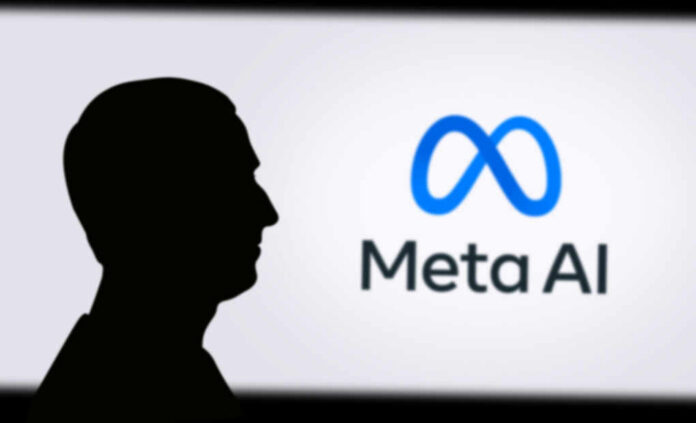
Meta’s plan to deploy a photorealistic AI “Mark Zuckerberg” inside the company is raising a hard question for American workers: is this leadership at scale, or surveillance at scale?
Story Snapshot
- Meta is developing a photorealistic, AI-powered 3D avatar of CEO Mark Zuckerberg intended to interact with employees in real time.
- The system is reportedly trained on Zuckerberg’s voice, images, mannerisms, public statements, and recent strategic thinking.
- Reports describe Zuckerberg personally overseeing the effort, including spending 5–10 hours per week coding and reviewing technical work.
- Meta says the exercise is not mandatory, but other coverage suggests employees could eventually be required to engage with the avatar.
- The project highlights a broader workplace trend: automation and “efficiency” tools arriving while job-security fears remain high.
Meta’s “AI Zuckerberg” moves from sci‑fi to internal management tool
Meta is developing a photorealistic, AI-powered 3D avatar of Mark Zuckerberg designed to converse with employees and provide feedback in real time, according to multiple reports. The avatar is intended to mirror Zuckerberg’s tone and mannerisms and draw on publicly available statements, plus his recent strategic thinking. Meta has described the work as early stage, but the premise is clear: employees may soon interact with a digital stand-in for the CEO.
Reports also say Zuckerberg is closely involved, spending roughly five to 10 hours per week coding and reviewing technical details. That level of direct participation signals the project is not a side experiment; it is being treated as part of how Meta wants to operate. For employees, the most immediate impact isn’t theoretical. It’s the possibility that “talking to leadership” becomes a standardized AI interaction—trackable, scalable, and potentially assessable.
What Meta says it is—and why skeptics see micromanagement
Meta has framed the initiative as optional and aimed at identifying where product managers might need training and development. That rationale fits a corporate push toward measurable performance and consistent guidance. But some coverage has described the concept as a “dystopian” extension of micromanagement, implying a future where the CEO’s presence is always “on,” ready to question decisions and enforce priorities without the practical limits of time, travel, or human bandwidth.
The strongest factual point in that debate is not a motive claim but a capability claim: an AI avatar that engages staff can also log interactions, standardize evaluations, and shape behavior at scale. Whether Meta uses it that way is not fully documented. Still, workers have reasons to worry when feedback systems become automated—especially in an industry that has already cycled through layoffs and restructuring while promising “efficiency” gains from AI.
Technical hurdles and why they matter for real-world rollout
Building a convincing, responsive, photorealistic avatar is also technically difficult. Reports cite major constraints such as computing requirements and latency, which can make real-time interaction costly and unreliable at scale. Those limits help explain why the project is described as early-stage and why a broad deployment timeline remains unclear. If the avatar cannot respond quickly and naturally, the tool risks becoming an expensive demo rather than a day-to-day management channel.
Meta’s own history adds uncertainty. Prior chatbot and character experiments reportedly struggled to gain traction, suggesting public adoption is not guaranteed even when the technology is novel. Inside a workplace, adoption can be driven by policy rather than enthusiasm, which is why the “optional versus required” question matters. If employees believe participation could influence performance perceptions, “optional” can feel like a formality rather than a real choice.
From internal training tool to a model for “AI bosses” everywhere
The broader significance reaches beyond Meta. If a $1.6 trillion company normalizes an executive avatar as a daily interface for guidance and evaluation, other large employers may copy the model. Success could also create a template for AI versions of other leaders and public figures, and Meta has indicated the approach could extend to influencers and creators as a scalable way to interact with audiences. That would push society further into synthetic relationships presented as authentic.
Meta Builds Photorealistic AI Version Of Mark Zuckerberg To Interact With Employees https://t.co/SrMQSLHYao
— zerohedge (@zerohedge) April 14, 2026
For Americans already frustrated with distant institutions and unaccountable “elites,” the optics are hard to miss: a CEO can be “present” everywhere without being personally present anywhere. Supporters can argue this democratizes access to leadership and speeds up decisions. Critics can argue it centralizes power, reduces human judgment, and conditions workers to accept automated oversight. It doesn’t prove abuse, but it does show the direction of travel.
Sources:
https://futurism.com/artificial-intelligence/meta-photorealistic-ai-clone-mark-zuckerberg
https://www.thedailybeast.com/meta-is-building-an-ai-version-of-mark-zuckerberg-to-chat-with-staff/