

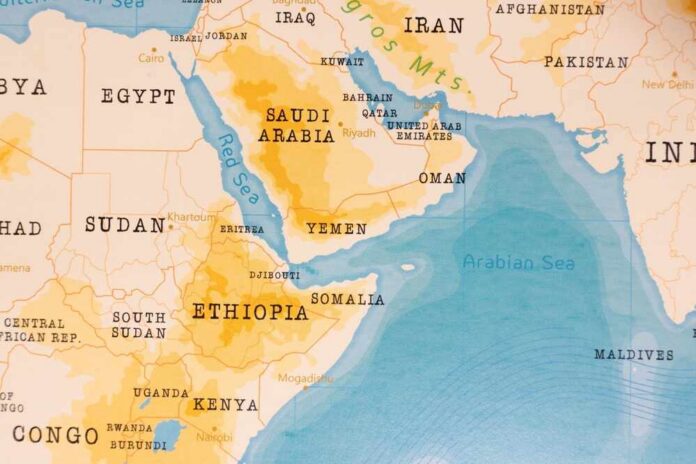
Iran’s squeeze on the Strait of Hormuz just collided with a hard reality: Saudi Arabia already has a major oil bypass running to the Red Sea, but it’s nowhere near enough to replace the strait.
Quick Take
- Saudi Aramco ramped up its East-West Pipeline (Petroline) to move crude to Yanbu on the Red Sea as Hormuz traffic was disrupted during the U.S.-Israeli war with Iran.
- The line reached about 7 million barrels per day capacity, a meaningful “lifeline,” but far below the roughly 15–20 million bpd that typically transits Hormuz.
- UAE and Iraq have partial alternatives, yet regional exports still fell in recent weeks, highlighting how chokepoints can overwhelm even prepared producers.
- The shift reduces Iran’s leverage at the margins while pushing Gulf states and customers toward costly, long-term bypass projects and higher security costs.
Saudi Arabia’s Petroline goes from contingency plan to front-line infrastructure
Saudi Arabia’s East-West Pipeline—often called Petroline—has become the most consequential “workaround” after restrictions and risks intensified around the Strait of Hormuz during the war that began Feb. 28, 2026. Reports say Saudi Aramco activated its contingency plan within hours, routing crude from eastern production centers westward to Yanbu. That shift let exporters load on the Red Sea instead of relying solely on a narrow waterway now exposed to disruption and political leverage.
What makes Petroline notable is not that it exists, but that it has been pushed to its reported operating ceiling at roughly 7 million barrels per day. That throughput is big enough to blunt panic in futures markets, especially when traders fear a total stoppage. Yet it does not “solve” Hormuz. Even if the pipeline runs perfectly, it covers only a fraction of the crude that normally moves through the strait, leaving global prices vulnerable to renewed escalation.
Why a 7-million-bpd bypass still can’t replace Hormuz
Before the current conflict, the Strait of Hormuz typically carried about 15–20 million barrels per day, roughly a fifth of global oil supply. That volume matters because it is concentrated in a single chokepoint, only tens of kilometers wide in places, where a regional power can raise risks simply by threatening ships and insurance markets. When security concerns spike, costs rise quickly, reroutings become limited, and even countries with spare capacity struggle to move barrels to buyers.
Saudi Arabia’s pipeline also can’t automatically rescue neighbors. Kuwait and Qatar, for example, remain more exposed because their export systems are tied more tightly to Gulf loading. Even for Saudi crude, bypassing Hormuz does not eliminate danger; it shifts it. Tankers leaving the Red Sea can still face other regional threats, and the wider region has seen periodic instability that makes any single route a gamble when war is active.
UAE and Iraq alternatives exist, but they are partial and expensive
Other Gulf producers have their own “Plan B,” but the research indicates these are constrained. The UAE can move some crude via pipelines to Fujairah, which loads outside the Strait of Hormuz, and Iraq has used land routes via Turkey and, in some cases, Syria. Those options can keep some exports alive, but they add cost, complexity, and political risk. The combined effect is still insufficient when a large share of Gulf shipping faces disruption.
The result is that exports have still plunged in recent weeks despite the improvisation. That mismatch—between headline-grabbing bypass projects and real-world capacity—helps explain why ordinary consumers can feel whiplash at the pump even when “solutions” are announced. Oil markets care less about press releases and more about how many barrels can actually be delivered safely, repeatedly, and at predictable cost.
What this means for U.S. policy: energy realism beats talking points
For Americans watching Washington, the Hormuz story is a reminder that energy policy intersects with national security whether leaders admit it or not. A pipeline in Saudi Arabia can reduce some global pressure, but it cannot fully shield U.S. households from overseas shocks when a major chokepoint is threatened. The practical takeaway for a government that says it prioritizes affordability is simple: resilient supply, diversified routes, and credible deterrence matter more than symbolic climate targets.
At the same time, the situation highlights why many voters—right and left—are skeptical of “expert” assurances that systems are robust. The Gulf states prepared for decades and still can’t fully replace Hormuz in a crisis. That’s not a conspiracy; it’s physics, geography, and infrastructure limits. If Americans want lower prices and fewer emergencies, leaders will have to level with the public about tradeoffs rather than promising frictionless, pain-free outcomes.
Sources:
Gulf workarounds fail to replace Hormuz as oil flows plunge despite …
Saudi pipeline to bypass Hormuz hits 7 million barrel goal
How Saudi Arabia’s East-West pipeline is easing the Hormuz …
Red Sea fix? China-bound oil tankers tap Saudi plan to bypass Strait of Hormuz