

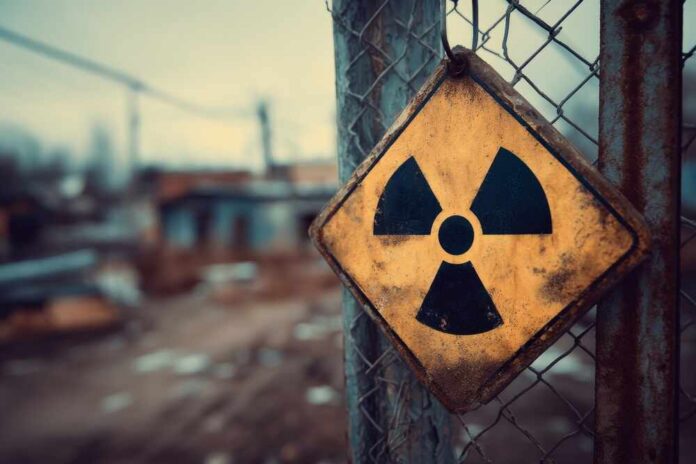
Trump’s second-term promise to keep America out of new wars lies shattered as US-Israeli strikes near Iran’s nuclear power plant risk a radiological catastrophe that could dwarf any military objective, with the UN’s nuclear watchdog sounding alarms that underscore the betrayal felt by voters who demanded an end to regime change adventurism.
Story Snapshot
- IAEA confirms four US-Israeli strikes near Iran’s Bushehr Nuclear Power Plant since war began, one just 75 meters from the reactor perimeter
- Director General Rafael Grossi warns strikes pose “very real danger” of severe radiological accident affecting Iran and neighboring regions
- European Union declares civilian infrastructure strikes illegal as conflict enters fifth week with global energy supplies threatened
- Trump administration’s involvement contradicts 2024 campaign pledges to avoid endless wars and regime change operations
Nuclear Safety Crisis Escalates Near Bushehr Reactor
The International Atomic Energy Agency confirmed on April 6, 2026, through independent satellite analysis that four military strikes have targeted areas surrounding Iran’s Bushehr Nuclear Power Plant since the US-Israeli war began five weeks ago. The most recent strike landed just 75 meters from the plant’s perimeter on April 4, raising alarm bells about potential radiological disaster. While the 1,000-megawatt reactor itself remains undamaged and operational, IAEA Director General Rafael Grossi issued an urgent warning that such proximity attacks “pose a very real danger to nuclear safety and must stop.”
IAEA Invokes Conflict Safety Standards
Grossi’s statement emphasized that nuclear facilities and their surrounding infrastructure should never be military targets, invoking the agency’s “seven pillars for nuclear safety during conflict.” The IAEA director stressed that auxiliary systems critical to reactor safety must remain protected, as damage to cooling or power systems could trigger catastrophic failures. This marks the first time the UN watchdog has publicly confirmed strike impacts through satellite imagery, lending credibility to Iranian reports that the Trump administration and previous officials dismissed. Iran has criticized the IAEA for insufficient action on prior nuclear facility threats, while one death was reported in an earlier strike near the plant.
Broader War Threatens Energy Supplies and Regional Stability
The nuclear safety crisis unfolds amid wider US-Israeli military operations targeting Iranian industrial infrastructure. On the same day as the IAEA warning, strikes hit the South Pars petrochemical complex near Asaluyeh, Iran’s Persian Gulf energy hub, with Israeli Defence Minister Israel Katz confirming the attack. The conflict has disrupted navigation through the Strait of Hormuz, a chokepoint for global oil supplies, prompting Europe to close airspace to US flights and intensifying diplomatic pressure. Trump’s deadline for reopening the strait looms as the European Union labeled strikes on civilian infrastructure “illegal” and called for immediate diplomatic resolution.
Constitutional Concerns and Broken Campaign Promises
For MAGA supporters who backed Trump’s 2024 campaign pledge to end regime change wars, the escalating Iran conflict represents a profound betrayal. The administration’s involvement in strikes near nuclear facilities—risking environmental and humanitarian catastrophe—mirrors the very interventionist policies Trump condemned during his first term and on the campaign trail. Constitutional questions arise about war powers and congressional authorization, issues that resonated deeply with conservatives frustrated by decades of executive overreach in foreign conflicts. With energy costs climbing due to Hormuz disruptions and no clear exit strategy, the base that demanded America First policies now watches another Middle East quagmire unfold under their chosen leader’s watch.
The radiological risks extend beyond Iran’s borders, threatening populations across the region if reactor auxiliaries suffer damage from continued strikes. Pakistan has proposed a truce while Japan pushes diplomatic talks, but the war grinds into its sixth week with no resolution in sight. Bushehr, Iran’s only operational nuclear reactor built with Russian assistance post-2011, sits in a densely populated area where any accident would devastate civilian communities. The conflict tests international nuclear safety norms at a moment when American credibility on non-proliferation and responsible military conduct faces global scrutiny, while voters at home question whether their tax dollars should fund operations that inch closer to nuclear disaster with each passing day.
Sources:
IAEA says strikes near Iran nuclear power plant ‘must stop’ – TRT World
UN nuclear watchdog: Strikes near Iran’s nuclear power plant ‘must stop’ – Middle East Eye
US-Israeli Strike Hits Iran’s South Pars Petrochemical Complex – TRT World
IAEA says strikes near Iran nuclear power plant must stop – Courthouse News
IAEA: Strikes near Iran nuclear power plant must stop – Anadolu Agency
IAEA confirms strikes near Iran’s Bushehr nuclear facility – RTHK
US-Israel Strikes Near Iran Nuclear Plant Spark Safety Alarm – Common Dreams
EU Calls Strikes on Iran Civilian Infrastructure Illegal – TRT World
IAEA confirms impact of strikes near Iran’s Bushehr nuclear power plant – Economic Times