
Trump’s threat to walk away from NATO over the Iran war is exposing a hard truth for conservatives: America can be pulled into another costly conflict even under a president elected to stop the “endless wars.”
Story Snapshot
- President Trump has publicly floated a potential U.S. exit from NATO after several allies refused to support U.S.-Israeli operations tied to Iran and the Strait of Hormuz.
- European governments reportedly declined U.S. requests for warships and for access to bases for strikes, arguing the Iran fight is not NATO’s mission.
- A 2023 U.S. law creates significant barriers to a unilateral NATO withdrawal, but analysts warn a president can still weaken the alliance without formally leaving.
- The Iran war’s pressure on global oil flows through Hormuz is colliding with domestic fatigue among MAGA voters who oppose new regime-change style interventions.
Trump’s NATO warning is tied directly to the Iran fight
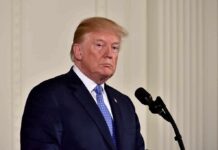
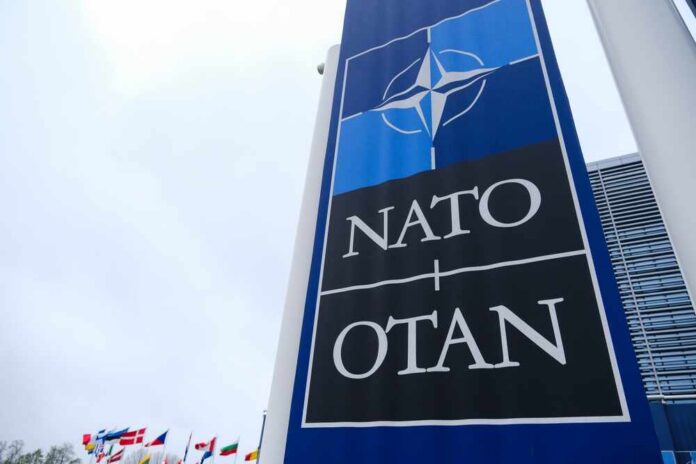
President Donald Trump’s latest NATO rhetoric is centered on allied refusal to back U.S.-Israeli military activity connected to Iran, not on the older debate about defense-spending targets. Reports describe European allies denying U.S. requests for base access and maritime support related to the Strait of Hormuz, a chokepoint for global energy shipments. Trump has called NATO a “paper tiger” and said U.S. membership is “beyond reconsideration” if allies won’t help.
Trump’s timing matters because the administration is also messaging that the Iran war could wind down soon, with public remarks suggesting a two-to-three-week horizon and potential U.S. troop withdrawal. Those projections may reassure voters exhausted by long deployments, but they also heighten uncertainty for energy markets and for U.S. deterrence abroad. If Iran can threaten shipping lanes or regional bases while Washington fights with allies, Americans pay twice—at the pump and in strategic leverage.
Why allies say “no” and why that fuels the split
European leaders have generally framed their reluctance as a NATO-mission issue: Iran is not an Article 5 collective-defense scenario, and they do not want the alliance absorbed into an offensive campaign. Some allies have been willing to support Ukraine without triggering Article 5, but they appear less willing to take steps that could widen a Middle East war. UK Prime Minister Keir Starmer has reiterated that NATO remains vital, signaling Europe is not conceding the institution’s value.
Trump’s counterargument is transactional and familiar to conservatives who watched allies underinvest for decades: the U.S. carries disproportionate costs and risk, and “partnership” must mean more than speeches. The tension now is that many Trump voters accept the burden-sharing critique while also rejecting another open-ended war. That internal conflict—demanding allies do more, while also wanting America to do less—helps explain why NATO talk is suddenly colliding with the “America First” promise.
Legal barriers make a formal withdrawal hard—damage can still happen
A key constraint is a 2023 law designed to prevent a president from unilaterally withdrawing the United States from NATO without congressional involvement. Reporting notes that this law was backed by figures including Secretary of State Marco Rubio, who now says the alliance’s value should be reassessed after the Iran conflict. The practical takeaway is that a clean, immediate exit is unlikely, but the White House still has tools to downgrade NATO in practice through policy choices.
Analysts highlighted in coverage argue that credibility is NATO’s real currency: if allies doubt U.S. commitments, deterrence weakens even if the treaty still exists. That can show up as quieter intelligence-sharing, reduced joint planning, slower deployments, and constant bargaining over basic cooperation. This is where conservatives should pay close attention: a president does not need a formal withdrawal vote to create lasting instability if allies and adversaries conclude America’s posture changes with every crisis.
The Strait of Hormuz raises the stakes for energy and domestic politics
The Strait of Hormuz is repeatedly referenced because it is a strategic bottleneck for oil and gas flows, and disruptions can send energy prices higher quickly. Reports cite roughly one-fifth of global oil transiting the strait, which makes any maritime standoff a kitchen-table issue for American families. For a conservative audience that has already endured years of inflation and high costs, the fear is simple: another foreign-policy spiral means another round of price shocks at home.
Politically, the NATO dispute lands in a moment when MAGA supporters are openly divided about how far the U.S. should go in the Iran war and what unconditional support for Israel should look like when Americans are carrying the bill. It does not quantify that split, but the pressure points are clear: rising energy costs, war fatigue, and skepticism toward global commitments that do not clearly advance U.S. constitutional interests, border security, and domestic stability.
Sources:
Trump mulls Nato withdrawal, stopping weapons to Ukraine, over support for Iran war
Trump NATO withdrawal Iran war allies
Can Trump Pull the US Out of NATO?