
Outgoing fire lighting up Beirut’s Hezbollah-controlled suburbs is the kind of “ceasefire” that turns a local militia into a regional trigger—and it’s now pulling civilians, oil markets, and U.S. forces into the blast radius.
Story Snapshot
- Video and eyewitness reporting show large explosions and outgoing projectiles over Beirut’s southern suburbs, a Hezbollah stronghold.
- Hezbollah launched rockets and drones toward Israel early March 2, 2026, framing it as retaliation tied to Iran’s leadership crisis after Ayatollah Ali Khamenei was killed.
- Israel responded with expanded airstrikes across Lebanon, including strikes in Beirut’s suburbs and southern areas, while warning evacuations in dozens of villages.
- Lebanon’s prime minister condemned the attacks as “irresponsible,” underscoring Beirut’s limited control over Hezbollah’s armed activity.
- The escalation is rattling energy and travel markets and risks widening a proxy war into a broader regional conflict.
What the Beirut Footage Shows—and Why It Matters
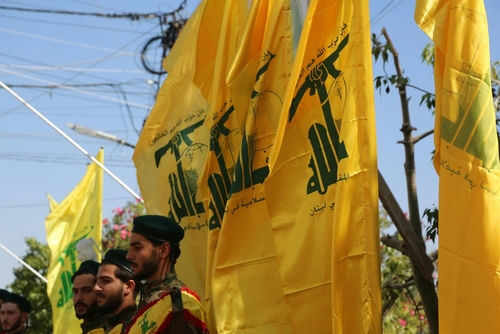
Reporting from multiple outlets described a night sky over Beirut’s southern suburbs illuminated by heavy explosions and outgoing projectiles, with the area widely recognized as a Hezbollah base of influence. The visuals matter because they show launches and strikes occurring in densely populated terrain, where civilian displacement can spike rapidly. The footage also underscores that this flare-up is not limited to border skirmishes, but is reaching Lebanon’s capital region.
The timeline reported by wire services places the initial escalation in the early hours of March 2, when Hezbollah launched rockets and drones toward Israel around 2:40 a.m. local time. Reports said the projectiles were intercepted or landed in open areas, with no major damage described in the initial accounts. Israel then expanded its response with airstrikes aimed at Hezbollah sites across Lebanon, including targets in Beirut’s southern suburbs.
From a 2024 Ceasefire to a 2026 Flashpoint
Hezbollah’s reported claim of responsibility is significant because it follows a November 2024 ceasefire that had paused major Israel-Hezbollah fighting after more than a year of cross-border exchanges tied to the Gaza war. The current round is being described as a breach of that ceasefire framework, with Hezbollah portraying the strike as retaliation linked to Iran’s turmoil. That linkage elevates the risk of the conflict becoming less containable.
Reuters and other reporting connected this escalation to late-February U.S.-Israeli strikes in Iran that killed Iran’s Supreme Leader Ayatollah Ali Khamenei, followed by retaliatory missile and drone activity directed at Israel and U.S. positions in the Gulf. In that context, Hezbollah’s move functions as a proxy response rather than a purely Lebanon-Israel dispute. The result is a tighter coupling between battlefield decisions in Tehran, Beirut, and Jerusalem.
Israel’s Response and the Civilian Risk in Lebanon
Israeli strikes reportedly targeted Hezbollah positions across Lebanon and included action against senior members, alongside warnings that pushed evacuations in more than 50 villages. Those details are crucial for understanding the scale: evacuation notices and widened strike geography signal that planners are preparing for sustained operations, not a one-night exchange. Lebanese reporting described roads clogged with fleeing residents, reflecting immediate human costs even without confirmed casualty totals in every area.
Lebanon’s Government Signals a Familiar Problem: Control
Lebanon’s prime minister, Nawaf Salam, publicly criticized the rocket fire as “irresponsible” and called emergency discussions, a response that highlights the state’s limited leverage over Hezbollah’s military decisions. That political reality has long frustrated Lebanese citizens caught between militia rule and foreign retaliation. For American readers, it is also a reminder of the constitutional difference between a sovereign government and a militia power structure—when armed groups operate outside state control, civilians pay first.
Regional Spillover: Energy, Travel, and U.S. Exposure
The broader shockwaves extend beyond Lebanon and Israel. Reports cited oil-price jumps and disruptions to regional air travel, including closures affecting major hubs, as markets reacted to the prospect of shipping threats and expanded strikes. Reuters also reported U.S. casualties in the Gulf during the widening confrontation, an indicator that American forces can become targets when proxy networks and state actors trade blows. Precise, verified details remain limited in some areas.
Israel also expanded strikes to other militant-linked sites, including a reported strike on Jamaa Islamiya’s headquarters in Sidon in southern Lebanon. That detail matters because it shows the conflict’s radius widening across different allied factions, not staying confined to a single organization or one neighborhood. With both sides signaling resolve and civilians fleeing in large numbers, the next key question is whether deterrence reappears—or whether the region slides into a longer, costlier cycle.
Sources:
Israel hits Beirut and southern Lebanon in response to Hezbollah attack, expanding Iran war
Israel strikes Lebanon following Hezbollah attacks, widening Iran conflict
Israel’s military releases video showing
Asharq Al-Awsat (English) report