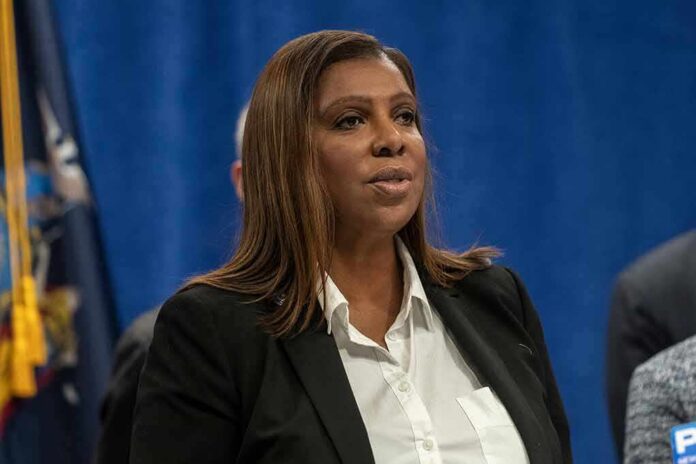
New York Attorney General Letitia James warned would-be challengers to Hakeem Jeffries to “get past Tish James first,” signaling a hard-edged defense of party power that should alarm anyone who cares about fair elections and open debate.
Story Highlights
- Letitia James publicly vowed to shield Hakeem Jeffries from primary challengers at a party event.
- Top New York Democrats showed a united front behind Jeffries days earlier.
- Democratic Socialists gained seats and withheld firm support for Jeffries, complicating his speaker bid.
- Jeffries said he does not support the Democratic Socialists’ agenda, marking a clear split.
James’s Warning Draws a Line Around Party Power
At a Brooklyn Democratic leadership gathering during the SOMOS conference in Puerto Rico on November 7, 2026, New York Attorney General Letitia James told potential challengers to Hakeem Jeffries they would have to “get past this neighborhood and Tish James.” She added, “We are fully backing our speaker,” framing the speakership as settled and personal. Her statement came as activists on the left weighed a challenge to Jeffries’s leadership within the Democratic Party.
Days earlier, New York’s Democratic establishment presented a united front. Governor Kathy Hochul, Attorney General Letitia James, Hakeem Jeffries, and other statewide leaders rallied in Brooklyn and boosted Jeffries from the stage. The event signaled institutional support around Jeffries before the internal fight grew louder. This alignment showed party machinery closing ranks, even as a left-wing bloc prepared to test leadership strength in the coming weeks.
Why the Left Wing Push Matters for Votes and Policy
Reports described Hakeem Jeffries as poised to become the first Black American Speaker if Democrats had the votes. But that road ran through a factional minefield. Several incoming lawmakers backed by the Democratic Socialists had not committed to voting for Jeffries as speaker. That hesitation threatened his vote count and, by extension, his ability to set the House agenda without making concessions to the insurgent wing.
The policy gap was not vague. In August 2026, Jeffries said, “I don’t support the [Democratic Socialists of America] agenda,” making the split explicit. Democratic Socialist candidates campaigned on sweeping programs, including universal healthcare and childcare, and challenged party leaders in primaries. Their gains suggested a more aggressive push inside the caucus for big-government plans that would drive spending higher and strain taxpayers if enacted.
What James’s Rhetoric Signals About Internal Control
James’s “mess with me” warning projected force more than persuasion. Her stance may rally establishment supporters, but it also underlined a bunker mentality inside New York’s Democratic leadership. Rather than winning a debate on costs, public safety, or border control, the message put loyalty tests over open primaries and grass-roots choice. That tone can fuel backlash among progressives while reminding moderates and independents why insider politics often looks closed and self-protective.
Even with institutional backing, Jeffries still faced the math of a close House. A small, disciplined faction can hold up a leader’s agenda when margins are thin. Analysts have compared such blocs to past congressional groups that traded leverage for rules, votes, or committee power. The uncertainty around final speaker votes kept pressure on Jeffries to either win over the left or risk early stumbles that would weaken his hand against President Trump’s agenda.
Implications for Voters Who Want Order, Security, and Lower Costs
Democratic Socialist plans would expand government spending and control. Conservatives see those pushes as threats to family budgets, energy independence, and border security. Jeffries’s break with that agenda shows he knows those policies are risky and unpopular outside deep-blue districts. But party leaders promising to “shield” him do not answer the core question: Will Democrats stop the far-left drift on crime, immigration, and spending that helped drive inflation and hurt working families?
For readers, the takeaway is simple. New York’s top Democrat used her office’s megaphone to guard party leadership from challenges. That looks like protection of power, not protection of people. If Democratic Socialists gain leverage and force costly promises, taxpayers will pay. If the establishment silences debate to hold the gavel, accountability will suffer. Either way, the fight on the left shows a party split on basic priorities while President Trump advances a border, energy, and cost-of-living agenda.
Sources:
nypost.com, bloomberg.com, abc6onyourside.com