

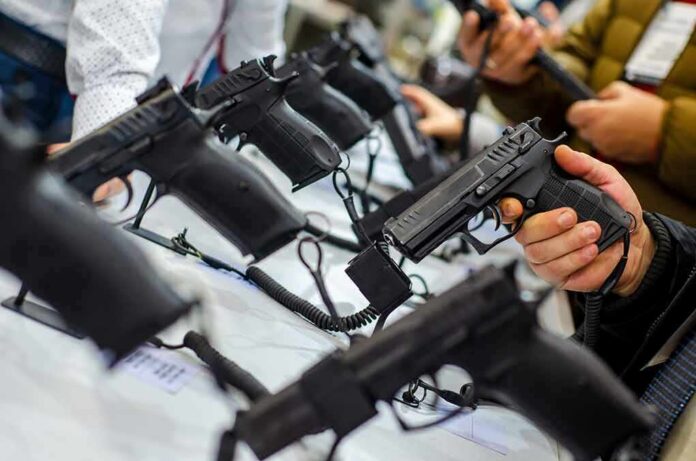
Federal crime data show most gun murders involve handguns, pointing enforcement at illegal pipelines—not lawful owners.
Story Highlights
- Handguns account for the clear majority of firearm homicides, not rifles like AR-15s.
- Recent federal data show about 80% of homicides involve a firearm in general.
- Federal tracing and reporting highlight rising crime recoveries of pistols submitted for tracking.
- Policy debates often mix weapon type with how guns are acquired, muddying solutions.
Federal Numbers Point to Handguns in Most Murders
Federal Bureau of Justice Statistics reporting shows handguns are used in most firearm homicides. The most recent long-run review reported an estimated 7,600 handgun homicides in 2018, and found that handguns made up a strong majority share of firearm murders across decades. That picture matches older case studies of homicide guns as well. The clear takeaway is simple and crucial for policy. The homicide problem is centered on handguns, not rifles commonly targeted in national debates.
The Bureau’s newer trend summary adds broader context. From 2018 through 2022, about 80% of all homicides involved a firearm, underscoring how central guns are to lethal violence in recent years. That figure describes method, not legality. It shows the scale of the gun homicide problem while also reminding us to separate two questions. First, what weapon gets used. Second, how the criminal got it. Mixing those questions leads to weak laws that chase headlines, not results.
Tracing Data Shows Pistols Dominate Crime Recoveries
Federal tracing and analysis reviewed by a national outlet highlight what police are finding on the street. Of the crime guns that agencies sent for tracing from 2017 to 2021, pistols vastly outnumbered rifles and shotguns. Agencies also submitted a growing share of recovered handguns for tracing, rising from 62% to 75% over a recent span. That trend fits what officers say daily. Crime guns are mostly concealable pistols, moving through theft, straw buyers, and gray markets.
Older Bureau of Justice Statistics tracing snapshots tell the same story. In a large mid-1990s trace set, nearly four out of five recovered crime guns were handguns, far outpacing rifles. The exact share will shift by city and year, but the pattern holds. Concealment and low cost make pistols the tool of choice for street crime. That is why any serious plan must hit the illegal supply chain for handguns. It must also punish armed felons who drive much of the harm in urban areas.
Policy Pitfall: Targeting Legal Owners While Ignoring Illegal Pipelines
Gun policy fights often latch onto the scariest image, like a black rifle, while ignoring hard numbers. Federal summaries and tracing patterns point to handguns in murders, not rifles that many politicians want to ban outright. A major media review of federal tracing also flagged growth in stolen guns and untraceable builds within crime recoveries, which points to illegal channels and diversion problems rather than sporting rifles bought by lawful owners. Laws must face those facts to work.
That means more focused enforcement, not broader bans on the law-abiding. Prosecutors should hammer gun traffickers, straw purchasers, and felons who carry. Police need support to run targeted operations against theft rings and “community guns.” Federal partners can speed traces, flag fast time-to-crime sales, and cut off rogue sellers. These steps protect the Second Amendment while going straight at the criminals who terrorize families and neighborhoods.
What Data Can—and Cannot—Prove About “Illegal Guns”
Some advocates claim a fixed share, like “80% of gun crimes use illegal guns.” Strong federal sources cleanly show weapon type in homicides. They are less precise on whether each gun was possessed or acquired illegally at the time of the crime. That gap calls for care, not denial. Federal tracing trends show pistols dominate crime recoveries and spotlight theft and trafficking risks. Those facts support a narrow aim: starve the illegal market for handguns and focus on repeat violent offenders.
Bottom Line for Lawmakers and Communities
President Trump’s team and local partners can back what works. Fund real-time tracing. Increase penalties for straw buying. Disrupt theft pipelines from cars and freight. Prioritize cases with short “time to crime,” which flag likely trafficking. Keep proven community violence units on the street and measure results. These actions protect rights, uphold the Constitution, and deliver safer streets. The data show where the threat lives. Policy must meet it there—focused, firm, and faithful to lawful gun owners.
Sources:
heritage.org, citizen.co.za, sciencedirect.com, politifact.com