
A D.C. court has just torn down a major wall of secrecy around January 6, forcing the city to stop hiding over 1,000 hours of police bodycam footage from the American people.
Story Snapshot
- A court ordered Washington, D.C. police to stop broadly blurring faces and voices in January 6 bodycam videos, citing the public’s right to see what happened.
- Judicial Watch fought a long Freedom of Information Act lawsuit and now expects more than 1,000 hours of footage in roughly 1,600 videos from D.C. police cameras.
- D.C. officials tried to block release by claiming privacy concerns and demanding over $1.5 million in fees before the court stepped in.
- The ruling strengthens government transparency, opens new evidence about January 6, and challenges media and political narratives built on limited footage.
Court Rejects D.C. Bid to Hide January 6 Bodycam Videos
D.C. Superior Court has ruled that Washington, D.C. Metropolitan Police Department cannot broadly blur or censor the faces and voices of non-police individuals in January 6 bodycam footage. The judge found that any privacy interest in crowds on public streets is very small and does not beat the strong public interest in seeing what police did that day. Judicial Watch, a conservative watchdog group, brought the case under the city’s Freedom of Information law after years of stonewalling by local officials.
Judicial Watch’s lawsuit seeks all body-worn camera video from officers who responded to protest activity in and around the Capitol on January 6, 2021, including footage from officer Michael Fanone. D.C. police first rejected these records, claiming they were part of “ongoing investigations” and that release would be an “invasion of privacy.” Judicial Watch argued that people at a massive public protest have no serious privacy claim and that the public needs to see what really happened instead of only hearing an official narrative.
Years of Stonewalling, Huge Fees, and a Big Win for Transparency
After refusing to release the footage, the Metropolitan Police Department demanded over $1.5 million in fees before making the January 6 bodycam videos public. Judicial Watch said the city claimed there were more than 1,000 hours of police footage and wanted $1,570,500 to process it. President Tom Fitton called this a “never legitimate” reason to keep the videos secret and argued that if the city truly wanted the videos out for political reasons, they would have released them long ago without that massive price tag.
The court’s new ruling cuts through that wall of secrecy by ending the city’s plan to blur every non-officer face and voice on camera. The judge concluded that those privacy claims are “little more than de minimis,” meaning they barely exist compared to the public’s right to know. This places Washington, D.C. in line with broader Freedom of Information principles, which say agencies must justify any redaction and should release as much non-exempt information as possible. For conservatives, this is a clear victory for limited government and open records.
What the Footage Could Show – And Why It Matters
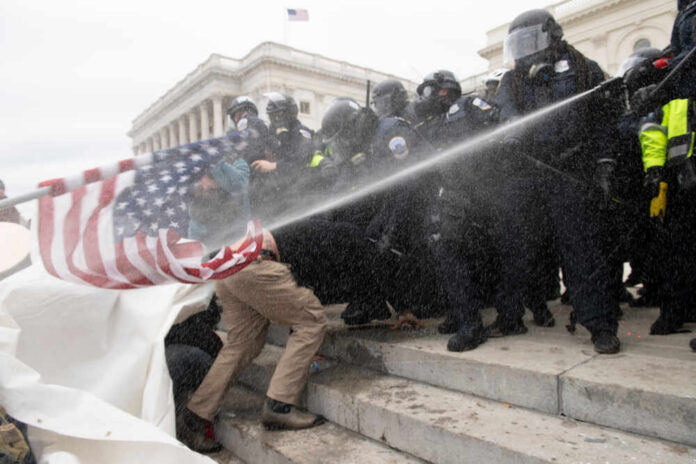
The bodycam videos are expected to document chaotic scenes around the Capitol, including violent tunnel clashes where officers like Fanone were beaten and crushed. National Public Radio has already reviewed many January 6 videos in federal court and described rioters using weapons such as pepper spray and bear spray against police. But until now, the Washington, D.C. police bodycam set has stayed largely hidden from the broader public, defense lawyers, and researchers who want to understand police actions and crowd behavior in full context.
BREAKING🚨: The DC Metropolitan Police Department has released more than 1,000 hours of body-worn camera footage (1,630 videos) from January 6, 2021. The release follows a court ruling that rejected MPD's attempt to redact faces and voices across the footage, capping a FOIA fight… pic.twitter.com/Tv0ddtx6FP
— Bruce Forman (@Brucenewsreview) July 7, 2026
Judicial Watch presents this release as a “hard-fought victory for transparency,” saying millions of Americans should be able to watch the footage themselves and judge what happened instead of trusting a small group of officials and media editors. At the same time, numbers like the group’s public claim of “about 1,000 assaults” drawn from the footage have not yet been backed by an independent forensic audit. A bipartisan Senate report put the number of injured officers around 140, showing how different counts and narratives compete for attention.
Next Steps: More Video, Outside Audits, and Competing Narratives
Judicial Watch has also battled the U.S. Capitol Police in court for access to its security camera system videos, arguing that Congress should not be allowed to hide public records behind technical exemptions. Separately, the House Administration Committee has already released over 5,000 hours of Capitol security footage, adding more video to the record but still leaving gaps in what the public can see. As more D.C. bodycam clips come out, many conservatives will watch for signs of unequal treatment, questionable use of force, or scenes that contradict media talking points about January 6.
Critics with access to tens of thousands of hours of footage, such as journalist Steve Baker, have argued that only a small fraction of people present that day engaged in violence. Those arguments, along with official reports and archives, show how strongly different sides contest the scale and meaning of January 6. The new court ruling does not settle those political debates, but it does give Americans more raw information to work with. For anyone who cares about the Constitution, due process, and honest history, more sunlight on government video is a clear step in the right direction.
Sources:
thegatewaypundit.com, judicialwatch.org, youtube.com, apps.npr.org, facebook.com, cha.house.gov, npr.org, justsecurity.org