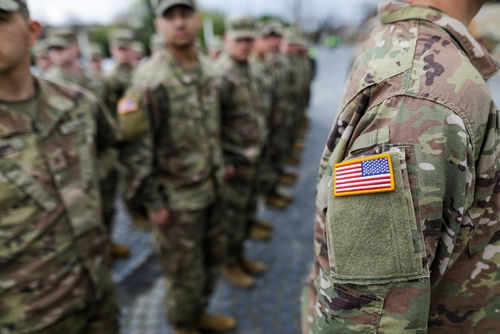
A quiet nuclear revolution on U.S. bases is aiming to end Washington’s grip on military energy — if the technology can beat the red tape that past generations never solved.
Story Snapshot
- Trump-era defense directives are pushing nuclear microreactors onto U.S. bases to cut dependence on fragile civilian grids and fuel convoys.[1][3]
- Small modular and microreactors promise round-the-clock on-site power with small footprints, islanded operation, and flexible siting.[2][5][7]
- History shows earlier Army reactors ran into serious maintenance, materials, and cost problems, raising questions about long-term practicality.[7]
- The core fight is whether nuclear is the smartest way to harden bases, or an expensive, regulation-heavy answer to a problem that might be solved more simply.
How Small Reactors Could Free Bases from Vulnerable Grids
Defense planners increasingly see small nuclear reactors as a way to keep critical missions running even when civilian power grids fail or fuel convoys are threatened.[3][6] Unlike the huge nuclear plants environmental activists love to attack, these “small modular reactors” are defined as units producing roughly 300 megawatts of electricity or less, designed for factory fabrication, modular construction, and shorter build times.[2][5] The smallest microreactors, at under about 20 megawatts, can be trucked in and potentially power an entire base or nearby town.[2][3]
The Trump administration’s defense and energy teams have leaned into this concept, treating resilient, on-base power as a national security issue, not just a utility bill.[1][6] Pentagon planners describe advanced microreactors that can fit into a handful of shipping containers or onto heavy transport aircraft, be set up at austere locations, and run for several years before refueling.[1][3] Supporters argue that such units would sharply reduce reliance on diesel fuel convoys and fragile transmission lines that adversaries or extreme weather can easily disrupt.[3][7]
Why the Air Force and Army Are Betting on Advanced Nuclear
Across the services, nuclear projects are moving from PowerPoint to early procurement, reflecting a strategic shift away from the failed green fantasies of the past decade.[1][3][6] The Department of the Army has been tasked to lead development of nuclear microreactors to power installations under executive direction, with a deadline to operate a reactor on a domestic base within a fixed timeframe.[1] Separately, the Department of the Air Force’s Advanced Nuclear Power for Installations effort is evaluating bases as hosts, aiming for secure, weather-proof power that can island from the civilian grid when needed.[1][4]
Public technical documents and independent studies describe why planners see these systems as a fit for defense.[2][5][7] Small modular reactors offer relatively small physical footprints, the ability to be sited where large plants are impossible, and incremental additions of capacity instead of massive one-time projects.[2][5] For military installations, researchers find that base power demands are usually modest compared with cities, meaning that one properly sized reactor could cover mission loads and potentially provide emergency power to surrounding communities during crises.[7] That vision aligns closely with conservative priorities of local resilience, secure borders, and reduced dependence on politicized state grids.
Lessons from Earlier Army Reactors and Today’s Skeptics
Critics, including some nuclear engineers, warn that the uniformed services have been down this road before and found the real-world burdens tougher than advertised.[7] The old Army Nuclear Power Program ran compact reactors in harsh locations, and documentation from that era describes serious engineering challenges beyond fuel logistics, such as high neutron exposure at reactor vessel walls, embrittlement, and steam generator leaks that required complex repairs and eventual decommissioning.[7] Analysts reviewing that history concluded that the strategic payoff was limited once full lifecycle costs and maintenance demands were counted.[7]
We are being shown why the hyperscale data center explosion and the nuclear resurgence are unfolding at the exact same time…
These compute campuses consume extraordinary amounts of uninterrupted electricity… some already require the power footprint of entire cities…
Small… https://t.co/BNHeqt0VKb pic.twitter.com/OQaGKYJc5O
— Observing Consciousness (@holonabove) June 5, 2026
Modern small modular reactor designs are not simply copies of those older units, and Department of Energy material stresses safety improvements, diverse coolant options, and stronger nonproliferation features.[5] However, federal reports and academic work still flag significant technology development, licensing, and regulatory risks before advanced small modular reactors can be widely deployed.[5] Skeptics argue that hardening substations, adding fuel storage, and expanding conventional backup generation might deliver comparable resilience without inviting Nuclear Regulatory Commission oversight and the security footprint that comes with on-base reactors. For conservatives focused on both strong national defense and limited bureaucratic overreach, the key question is whether today’s microreactor push delivers genuine energy independence for warfighters or simply builds another expensive, regulation-heavy system that future administrations could weaponize against local control.
Sources:
[1] Web – Small Nuclear Reactors Offer Hope for Military Base Power Independence
[2] Web – Joint Base San Antonio Advanced Nuclear Power for Installations
[3] Web – Small Modular Reactors – World Nuclear Association
[4] YouTube – Army tests nuclear microreactors as US pushes next …
[5] Web – US Air Force names potential SMR hosts – World Nuclear News
[6] Web – Army announces next steps on Janus Program for next-generation …
[7] Web – Army solicits bids for microreactors to site at military bases