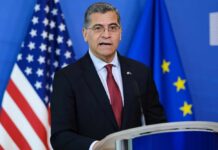

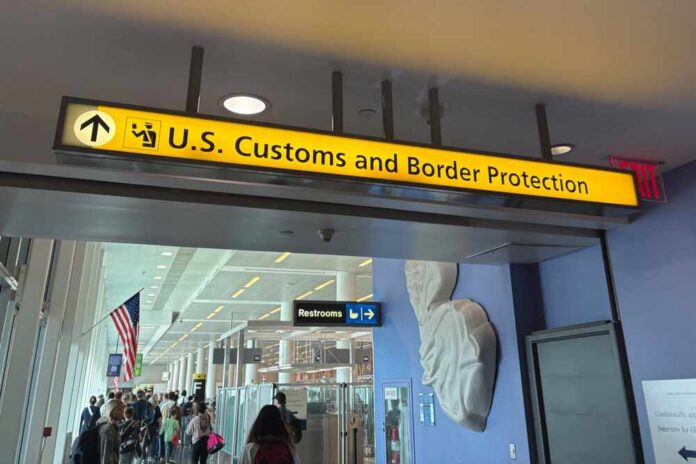
Homeland Security chief Markwayne Mullin is weighing a targeted customs staffing squeeze on sanctuary-city airports, a direct challenge to local noncooperation that could finally force accountability—or trigger airport chaos if cities refuse to budge.
Story Snapshot
- Mullin has floated reducing, not eliminating, customs staffing at airports in sanctuary jurisdictions [2][3].
- The leverage aims to prioritize federal resources toward cities that cooperate on immigration enforcement [3][5].
- Airline and travel executives were briefed; fallout concerns were described as “enormous” by critics [2][5].
- Legal pushback and a potential Tenth Amendment fight are anticipated by commentators [4].
Mullin’s Leverage Strategy: Tie Airport Throughput to Local Cooperation
Homeland Security Secretary Markwayne Mullin publicly framed international gateway airports as leverage points where federal customs operations meet local sanctuary policies. In a Fox News interview, Mullin questioned continuing full customs service in cities that will not cooperate once travelers exit the terminal, asking who is willing to partner with the department on enforcement priorities [3]. Reports say the concept focuses on reducing, rather than abolishing, customs staffing to reallocate limited personnel toward jurisdictions that work with federal authorities [2][3].
Coverage identified potential targets including New York-area hubs and other major airports in cities with sanctuary policies, underscoring that the idea has been scoped beyond rhetoric [1][2]. Mullin linked the approach to resource constraints and congressional funding fights, arguing the department must prioritize amid opposition to robust border and interior enforcement funding [3]. The principle is straightforward: federal services should not be maximized where local leaders decline to cooperate on post-arrival immigration enforcement [3][5].
Meetings With Industry: Serious Talks, Serious Warnings
Reports indicate Mullin and senior officials discussed the concept with a group of airline and travel executives at Department of Homeland Security headquarters, signaling the matter moved into preliminary operational conversations rather than staying on cable-news airwaves [2][5]. Travel leaders, according to the coverage, warned of significant fallout if customs staffing at major hubs is trimmed, raising concerns about delays, missed connections, and broader pressure on international travel networks that rely on those gateways [2][5].
Critics framed the potential reductions as a blunt instrument that could roil commerce and tourism, arguing that even partial cuts at high-volume airports risk substantial disruption. Some outlets claimed the move could effectively halt international travel through key hubs, and that the notion reflects a thin grasp of the complexities of global passenger flows and airport operations if implemented too aggressively [1][2]. Those warnings highlight an operational trade-off if cities keep sanctuary rules while the department reallocates personnel.
Law and Federalism: Pressure Tactic or Constitutional Tripwire?
Commentary around the proposal points to legal challenges from sanctuary jurisdictions, with one transcript warning the plan could collide with Tenth Amendment arguments and face immediate lawsuits from local governments [4]. Because customs inspections are a federal function while local policing priorities are controlled by cities and states, the question becomes whether conditioning federal staffing levels to encourage cooperation turns into unlawful coercion. The current record contains no formal directive or legal memo from the department, leaving the precise authority theory untested publicly [2][3][4][5].
NEW: Last night on @FoxNews, DHS Secretary Markwayne Mullin again said he is considering pulling CBP out of sanctuary city airports, adding that "we are currently drawing up plans" to do so. His comments came in response to protests at ICE's Delaney Hall detention facility in…
— Bill Melugin (@BillMelugin_) May 27, 2026
The policy’s strength is clarity of purpose—align scarce federal resources with communities that respect federal immigration law after travelers leave the jet bridge. The policy’s weakness is uncertainty in both execution and law. No source here includes a signed order, cost-benefit analysis, or quantified enforcement gains tied to staffing changes [1][2][3]. Without official documents and metrics, supporters must rely on common-sense prioritization arguments, while opponents lean on disruption forecasts and anticipated litigation [1][2][3][4][5].
What Patriots Should Watch Next
Conservatives should track whether the department issues an implementation memo specifying target airports, staffing adjustments, and legal grounding. Formal notice to airport authorities and airlines would confirm timelines and scope, while any court filings will reveal the constitutional arguments. If cities want full federal service while refusing cooperation after arrivals, Mullin’s approach tests that imbalance. If courts block the tactic, Congress may need to condition grants or pass explicit authority to end sanctuary carve-outs that undermine national sovereignty [2][3][4][5].
Sources:
[1] Web – ‘This Isn’t Holiday Inn’: Markwayne Mullin Mocks NJ Protesters, Teases …
[2] Web – DHS Threatens to Withdraw CBP Officers from Airports in …
[3] YouTube – DHS threat to pull customs officers from sanctuary city …
[4] Web – New DHS Secretary Threatens to Sabotage America’s …
[5] YouTube – DHS Secretary considers harsher scrutiny of sanctuary city …