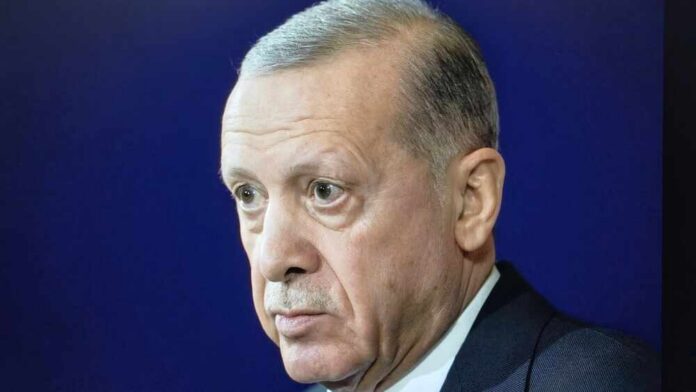
As Turkey hardens its stance against Israel and flirts with anti-Western blocs, Americans watching the Middle East’s new map should be asking whether Washington is sleepwalking into another dangerous crisis.
Story Snapshot
- Turkey has sharply downgraded ties with Israel, recalled ambassadors, and joined a legal case accusing Israel of “genocide.”
- Ankara has imposed sweeping trade bans and threatens to use NATO veto power against cooperation with Israel.
- The rivalry is expanding across Gaza, Syria, Iran, and the eastern Mediterranean, even as direct war still appears unlikely.
- These shifts raise hard questions about American strategy, foreign aid, and the safety of U.S. allies in a volatile region.
Turkey’s Break with Israel Shows How Fast the Map Can Change
Analysts tracking Turkey and Israel agree that their relationship has entered one of its worst periods in decades. Brookings describes how ties that were formally normalized in 2022 “dramatically worsened” after Hamas’ October 7 attack and Israel’s military response in Gaza, with both countries recalling their ambassadors and effectively downgrading diplomatic relations.[4] A long, cyclical pattern of cooperation followed by rupture has returned, but this time the stakes are higher because the entire region is already unsettled by broader conflict.
The Washington Institute reports that Turkey has not stopped at harsh words. Ankara rolled out trade restrictions against Israel in April and then announced a full ban on imports and exports with Israel on May 2, declaring that the boycott would continue until a permanent ceasefire and expanded humanitarian aid are achieved in Gaza.[2] That decision weaponizes economic ties against a fellow American ally and sends a pointed message about where President Recep Tayyip Erdoğan wants to position Turkey in the emerging order.[2]
From Harsh Rhetoric to Legal and Economic Warfare
Turkey’s leaders have paired those economic steps with language that goes far beyond normal diplomatic criticism. Brookings notes that Erdoğan has publicly called Hamas a “liberation movement,” rejected descriptions of Hamas as a terrorist organization, and accused Israel of committing “genocide.”[4] The Foundation for Defense of Democracies adds that Turkish government messaging has even compared Israeli Prime Minister Benjamin Netanyahu to Adolf Hitler, rhetoric that further poisons the well and makes meaningful dialogue with Jerusalem far more difficult.[1]
That rhetoric is being translated into concrete legal pressure. The Washington Institute details how Turkey joined South Africa’s case at the International Court of Justice, seeking to prosecute Israel over alleged genocide in Gaza.[2] Analysts at the same institute say Ankara’s filing stopped short of fully accepting the court’s eventual judgment as binding, but the move still signals an intention to use international courts as a political weapon.[2] For American readers, that pattern should sound familiar: lawfare, global institutions, and “human rights” language used selectively to isolate U.S. partners while giving authoritarians a free pass.
A Spreading Rivalry Across Gaza, Syria, and the Seas
Foreign policy analysts warn that the clash is not confined to angry speeches or even trade boycotts. A study published by Foreign Policy in Focus describes a “shadow war” in which Turkish and Israeli interests collide from Gaza to Syria and the eastern Mediterranean, with each side backing different local actors and competing over energy routes and influence.[3] A YouTube analysis on possible Israel–Turkey conflict highlights how Gaza, Syria, Iran, and even areas like Somaliland in the Horn of Africa have become overlapping arenas where the two states find themselves on opposite sides.
Yet several experts caution against assuming that direct war is around the corner. The Hellenic Foundation for European and Foreign Policy assesses that the likelihood of open conflict between Israel and Turkey has “substantially decreased,” arguing that both governments currently prioritize stability and reconstruction over an outright clash. Brookings similarly stresses that even as politics sour, some trade and practical engagement continue beneath the surface.[4] That picture fits a longer historical pattern, where Ankara and Jerusalem oscillate between crisis and quiet cooperation without formally severing every tie.
NATO Leverage and What It Means for the United States
The growing chill has major implications for the North Atlantic Treaty Organization (NATO) and, by extension, for American security. The Washington Institute warns that Turkey is likely to push for a moratorium on NATO cooperation with Israel, using the alliance’s requirement for unanimous consent to block joint meetings, exercises, and information sharing that once helped stabilize the eastern Mediterranean.[2] Turkey has reportedly already used its veto power to obstruct various forms of cooperation since the war in Gaza began.[2]
As U.S. war redraws Middle East, Turkey braces for rivalry with Israel – The Washington Post https://t.co/rg5dqvrWWt
Follow @NewsHubGlobe for 24/7 breaking news from around the world. pic.twitter.com/PPIFk8dyzB
— News Hub (@NewsHubGlobe) May 21, 2026
For Americans who believe in a strong but focused foreign policy, this raises tough questions. Conservative analysts at the Foundation for Defense of Democracies argue that Ankara is leveraging legal, rhetorical, diplomatic, and possibly military tools in a confrontational policy toward Israel, even as it remains a formal NATO member that still receives Western technology and investment.[1] That dynamic embodies a broader problem: Washington keeps writing checks while some “allies” pursue agendas that undercut Israel, empower Islamist movements, and complicate U.S. strategy against Iran.[1]
Why This Matters for U.S. Voters and Taxpayers
For Trump supporters watching this unfold, the lesson is not that America must police every quarrel overseas. The lesson is that years of globalist complacency and soft-pedaling radical Islam have produced a NATO partner willing to boycott Israel, wage lawfare in international courts, and undermine alliance cooperation while still expecting Western benefits. Analysts at RUSI note that post–October 7 realignment has opened new “strategic opportunities” for both Israel and Turkey, but those opportunities do not automatically favor American interests.
As this rivalry hardens, conservatives should demand serious answers: Why is the United States still funding institutions and partners that target Israel in court and give cover to groups Washington officially designates as terrorists? Why should American energy policy remain shackled at home while Turkey and other regional players jockey over pipelines and sea lanes abroad? The evolving Turkey–Israel standoff is a reminder that a strong, constitutional, America-first foreign policy begins with clear-eyed assessments of who actually stands with us—and who only pretends to when it is convenient.
Sources:
[1] Web – Turkey-Israel tensions deepen amid Erdogan’s confrontational policy
[2] Web – Israel-Turkey Relations Nearing a Rupture | The Washington Institute
[3] Web – The Shadow War between Turkey and Israel – FPIF
[4] Web – Understanding Turkey’s response to the Israel-Gaza crisis | Brookings