
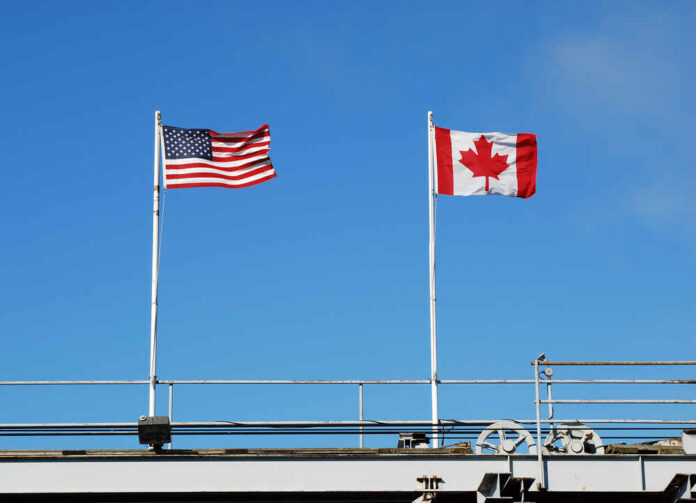
The Trump administration has suspended U.S. participation in an 86-year-old joint defense board with Canada, sending a pointed message that rhetoric without action on defense commitments will no longer be tolerated.
Story Highlights
- The Pentagon paused its role in the Permanent Joint Board on Defense, a bilateral advisory body created in 1940, citing Canada’s failure to make credible progress on defense commitments.
- U.S. Under Secretary of Defense Elbridge Colby framed the move as a reassessment of whether the forum still serves American interests, not a withdrawal from NORAD or NATO.
- The board had already failed to meet since late 2024, despite a scheduled biannual cadence, suggesting the pause formalizes a preexisting breakdown in coordination.
- Canada responded by emphasizing continued cooperation through other channels and pledging to diversify its defense partnerships — an implicit acknowledgment that the bilateral relationship is under strain.
A WWII-Era Board Put on Ice
On May 18, 2026, the U.S. Department of Defense announced it was pausing American participation in the Permanent Joint Board on Defense, the oldest continuous bilateral defense forum between the United States and Canada. Created in 1940 as part of a wartime North American defense architecture, the board has historically supported top-level coordination on Arctic security and continental defense. The symbolic weight of suspending a body with that pedigree is hard to overstate, even if its current operational workload has shifted to denser structures like the North American Aerospace Defense Command (NORAD) and NATO.
Colby stated the pause would allow Washington to reassess whether the forum “continues further to serve American interests,” and directly cited Canada’s failure to make “credible progress on its defense commitments.” The language is pointed — not diplomatic boilerplate, but a formal, on-the-record indictment of an ally that has repeatedly talked up its defense ambitions while falling short on delivery. The board had not met since late 2024, despite a biannual schedule, meaning the pause formalizes what was already a lapsed relationship rather than interrupting active work.
Canada’s Defense Spending Gap Drives the Dispute
The Trump administration’s frustration centers on a gap between Canadian promises and performance. Ottawa has pointed to over $40 billion invested in NORAD-related projects, including a $6.5 billion over-the-horizon radar system in Nunavut, and claims it is on track toward NATO’s 2% of gross domestic product (GDP) spending target. But U.S. officials have drawn a sharper line, arguing the gaps between “rhetoric and reality” on defense burden-sharing, procurement timelines, and continental defense contributions can no longer be ignored. Concrete disputes include Canada’s review of its F-35 procurement and the pace of Arctic defense modernization.
From a conservative standpoint, the U.S. position is straightforward and defensible. American taxpayers have underwritten the security architecture that protects North America for decades. Allies who benefit from that umbrella while chronically underspending on their own defense are, in effect, freeloading. The Trump administration is applying the same pressure it has used with NATO partners — show credible progress or expect consequences. That is not hostility; it is accountability.
What the Pause Does — and Doesn’t — Mean
The Pentagon was explicit that this is a pause in one bilateral advisory board, not a withdrawal from NORAD, NATO, or the broader U.S.-Canada defense relationship. Core operational cooperation, including joint aerospace defense and intelligence sharing, continues through larger and more consequential structures. The Permanent Joint Board on Defense is historically significant but functions primarily as an advisory and consultative body; its absence does not leave North America’s air defenses unmanned.
The United States has indefinitely suspended its participation in the Permanent Joint Board on Defense (PJBD) with Canada, marking the first break in the bilateral military group's 86-year history.
U.S. Undersecretary of Defense Elbridge Colby announced the pause stating that…
— WORLDINTEL24🛜 (@WORLDINTEL24) May 19, 2026
Canada’s response has been measured. Prime Minister Mark Carney signaled he would not “overplay” the significance of the pause, while defense officials said Ottawa would “work with trusted partners who are ready to work” and diversify its defense partnerships. That language is telling. Diversifying away from the United States on continental defense is not a realistic short-term option — Canada’s geography, military interoperability, and intelligence relationships are deeply interwoven with Washington. The pledge to diversify reads less as a credible strategic pivot and more as face-saving messaging for a domestic audience watching a key bilateral institution go dark. The more productive path forward is for Ottawa to close the credibility gap Colby identified and give the Trump administration a concrete reason to restore full participation.
Sources:
[1] YouTube – Trump Suspends Historic US-Canada Defence Cooperation
[2] Web – US pauses joint defense effort with Canada that dates to WWII – WPXI
[3] Web – U.S. halts joint defence board with Canada – Canadian Affairs
[4] YouTube – Pentagon abandons Canada-U.S. defence board …