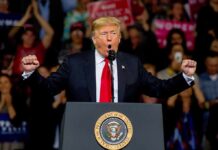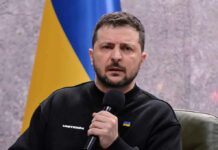


President Trump’s warning that U.S. troop cuts in Germany will go far beyond 5,000 puts NATO’s comfort zone on notice—and forces Europe to decide whether it will defend itself without Washington doing the heavy lifting.
Quick Take
- Trump said the United States will reduce its troop presence in Germany “a lot further” than the Pentagon’s already-announced 5,000-troop withdrawal.
- The Pentagon described an initial 6–12 month drawdown that would pull out about one-seventh of the U.S. force based in Germany.
- German leaders are split in tone: Chancellor Friedrich Merz criticized the U.S. approach to the Iran war, while Defense Minister Boris Pistorius urged Europe to take more responsibility.
- Congress has placed legal limits on major Europe-wide troop reductions, potentially constraining how far any drawdown can go without formal review.
Trump Escalates Beyond the Pentagon’s 5,000-Troop Plan
President Donald Trump told reporters in Florida that U.S. troop reductions in Germany will go “a lot further” than the Pentagon’s plan to withdraw 5,000 troops. The Defense Department’s initial move, announced the day before, is expected to unfold over roughly six to 12 months. Publicly, Trump offered no detailed explanation for how large the eventual reduction could be, leaving allies and Congress to interpret the warning as leverage rather than a finalized order.
The baseline numbers matter because Germany remains one of America’s most important overseas platforms, with roughly the mid–tens of thousands of U.S. personnel stationed there depending on the count used. The Pentagon’s planned 5,000 reduction equates to about one-seventh of the force described in reporting, and the units implicated include a brigade element and a long-range fires component. Military medical care at Landstuhl, a key regional hub, was reported as not being cut.
Germany’s Pushback Highlights a Wider Alliance Problem
Chancellor Friedrich Merz’s criticism of the U.S.-Israeli military campaign against Iran set the political context for the dispute. Reporting described Merz as faulting the United States for a “lack of strategy” and warning about “humiliation” by Iran, remarks that landed during a tense moment for transatlantic coordination. While some online framing suggested Merz was walking his comments back, the available reporting did not confirm a clear reversal from Merz himself.
German Defense Minister Boris Pistorius responded in a noticeably measured way, calling troop reductions expected and arguing Europe must become more self-reliant. That message aligns with a reality many American voters—especially after years of costly foreign commitments—have pressed for: allies should carry more of their own defense burden. At the same time, the U.S. presence in Germany is not just symbolic; it supports command infrastructure, logistics, and rapid response capacity that Washington has relied on for decades.
What the Troops in Germany Actually Do—and Why Cuts Aren’t Simple
U.S. forces in Germany are rooted in post–World War II basing that evolved into Cold War deterrence and modern command-and-control. Key sites such as Ramstein Air Base support U.S. European and Africa operations, and the broader network underpins movement of personnel and equipment across regions. That is why some defense officials and aides have stressed Germany’s strategic value even when Washington is frustrated with Berlin’s politics or Europe’s uneven military spending patterns.
Congressional Guardrails and the “Deep State” Question Voters Keep Asking
One reason the story is politically combustible is that it collides with a familiar American frustration: who really runs foreign policy—elected officials or entrenched bureaucracies? Politico reported that Pentagon officials were shocked by the pace and framing of the drawdown conversation, suggesting internal resistance or, at minimum, institutional caution. Separately, legislation passed in December was described as limiting Europe-wide reductions below a specified troop level without a risk assessment, giving Congress a formal lever.
Trump Warns US Will Cut ‘Much Further’ Than 5,000 Troops in Germany, as Chancellor Merz Tries To Walk Back His Criticism of Iran Military Operations (VIDEOS) https://t.co/DAcizECa40 #gatewaypundit via @gatewaypundit
— tim fucile (@TimFucile) May 5, 2026
For conservatives who prioritize limited government and accountable leadership, the key test will be whether troop posture changes follow transparent strategy rather than improvisation—or bureaucratic inertia. For liberals worried about instability, the practical question is whether Europe fills capability gaps instead of assuming U.S. taxpayers will indefinitely subsidize NATO readiness. What remains clear from current reporting is that the initial 5,000 withdrawal is real and scheduled, while Trump’s “much further” threat is intentionally undefined.
Sources:
Trump says US will reduce troop presence in Germany ‘a lot further’ than initial 5,000 withdrawal
Trump Germany troop pullout Pentagon shocked